
What is marble etching? A 2026 guide for homeowners

You’ve just spilled wine on your marble countertop and now there’s a dull spot that won’t go away. You scrub harder, try different cleaners, but nothing works. Here’s why: you’re likely dealing with etching, not a stain, and treating it like one makes everything worse. This guide explains what marble etching actually is, how to identify it correctly, and the right ways to prevent and repair it so your marble stays beautiful.
Table of Contents
- Understanding Marble Etching: Causes And Mechanism
- Identifying Marble Etching Vs Stains And Other Marks
- Common Misconceptions About Marble Etching And Care
- Repairing Marble Etching: Diy And Professional Treatments
- Preventing Marble Etching And Maintaining Marble Surfaces
- Protect And Enhance Your Marble Surfaces With Surfaces Galore
- Frequently Asked Questions
Key takeaways
| Point | Details | |-------|---------|| | Etching is chemical damage | Acidic substances dissolve marble’s calcium carbonate surface causing permanent dull spots. | | Different from stains | Etching changes surface texture and gloss while stains only alter color without texture loss. | | Happens extremely fast | Acid contact can etch marble within seconds to minutes of exposure. | | Prevention requires vigilance | Avoid acidic cleaners and household substances like lemon juice, vinegar, and wine near marble. | | Repair depends on severity | Light etching responds to home polishing while deep damage needs professional honing. |
Understanding marble etching: causes and mechanism
Marble is primarily composed of calcium carbonate, a mineral that reacts chemically when exposed to acids. This reaction is what we call etching. When acidic substances contact marble, they literally dissolve the surface layer, creating a rough, dull appearance where the glossy finish once was.
The speed of this damage surprises most homeowners. A splash of lemon juice can begin etching within 30 seconds. Wine left sitting creates visible marks in under two minutes. Even mildly acidic substances cause damage faster than you’d expect.
Common household culprits include:
- Citrus fruits and juices (lemons, limes, oranges)
- Vinegar and vinegar-based cleaners
- Wine, coffee, and soft drinks
- Tomato-based sauces and products
- Many bathroom cleaners and toilet bowl products
The chemical process is straightforward but permanent. The acid breaks down the calcium carbonate molecules at the surface, removing microscopic layers of stone. This dissolution creates a rougher texture that scatters light differently, producing that characteristic dull or whitish spot.
Pro Tip: Test any new cleaner on an inconspicuous area first. Even products labeled as safe can contain mild acids that damage marble over time.
Identifying marble etching vs stains and other marks
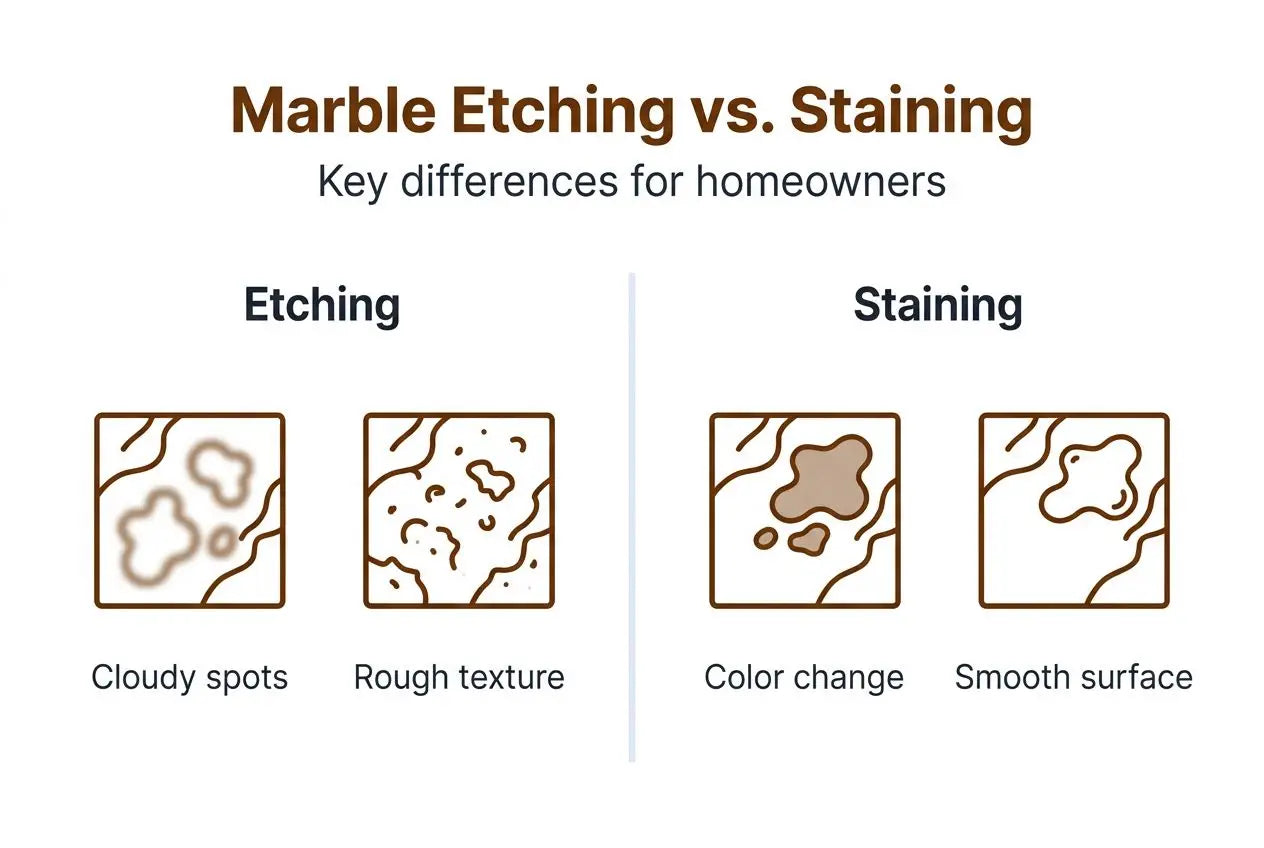
Correct identification prevents wasted effort and additional damage. Etching removes microscopic marble layers changing both texture and appearance, while stains penetrate the stone and discolor it without affecting the surface finish. This distinction matters because treatments differ completely.
Here’s how to tell them apart:
| Damage Type | Appearance | Texture | Cause | Feel |
|---|---|---|---|---|
| Etching | Dull, whitish spots | Rough, matte | Chemical reaction | Slightly rough to touch |
| Staining | Dark discoloration | Smooth, unchanged | Absorption of substance | Same as surrounding marble |
| Scratching | Linear marks | Grooved channels | Physical abrasion | Noticeably rough edges |
Run your fingers across the affected area. Etching feels slightly rougher than the surrounding polished surface. Stains feel identical to undamaged marble because they sit below the surface. Scratches have distinct edges you can feel.
Visual inspection reveals more clues. Etched areas appear lighter or cloudier than the rest of the marble, especially under direct light. Stains typically darken the stone, appearing as brown, yellow, or rust-colored marks. The pattern matters too: etching often follows the exact shape of a spill, while stains may spread or seep into the stone’s pores.

Many homeowners misidentify etching as a stain and attempt to remove it with harsh cleaners. This approach fails because etching is physical damage to the surface structure, not a foreign substance sitting on top. Using acidic cleaners on etched marble compounds the problem by creating more etching.
Pro Tip: Take photos of damage under different lighting conditions. This helps you track whether the issue is worsening and provides useful reference when consulting with marble maintenance professionals.
Common misconceptions about marble etching and care
The confusion between etching and staining causes significant damage. Research shows 30% of homeowners confuse these two distinct problems, leading to improper treatment that worsens the original issue. This misunderstanding is costly and completely avoidable with proper knowledge.
Myth one: acidic cleaners remove etching. Reality: they create more etching. Many people think stronger cleaners fix stubborn marks, but acidic products dissolve additional marble surface. Each application deepens the damage and expands the affected area.
Myth two: sealers prevent etching. Sealers protect against staining by filling the stone’s pores and preventing liquid absorption. However, they do nothing to stop acid reactions on the surface. A sealed marble countertop etches just as easily as an unsealed one when exposed to lemon juice or vinegar.
Myth three: all marble damage looks the same. Homeowners often assume any mark on marble requires the same treatment. This leads to using stain removal methods on etching or trying to polish away stains. Understanding that different damage types need different solutions prevents wasted effort.
Common mistakes include:
- Using vinegar or lemon juice as natural cleaners
- Applying abrasive scrubbing pads to buff out marks
- Relying solely on sealers without changing cleaning habits
- Ignoring minor etching until it becomes severe
- Mixing incompatible cleaning products
The sealer misconception is particularly problematic. After sealing, homeowners often relax their vigilance around acids, thinking the marble is now protected. This false confidence leads to more frequent acid exposure and subsequent etching. Understanding the benefits of marble countertops includes knowing their limitations and required care.
Repairing marble etching: DIY and professional treatments
Repair success depends entirely on etch severity and your comfort level with restoration techniques. Light surface etching responds well to careful home treatment, while deep damage requires professional expertise to avoid creating uneven surfaces or additional problems.
For minor etching, marble polishing powder offers an accessible solution. These products contain fine abrasives that gently smooth the roughened surface and restore some gloss. Apply with a soft cloth using circular motions, then buff with a clean cloth. This method works best on small spots less than two inches across.
Moderate etching needs more aggressive polishing with progressively finer grits. Start with a coarser compound to level the surface, then move to finer polishes to rebuild the shine. This multi-step process requires patience and even pressure to avoid creating dips or waves in the surface.
Deep etching exceeds DIY capabilities. Professional stone restoration involves honing the entire surface with industrial equipment to remove damaged layers uniformly. Technicians then polish the stone through multiple stages, rebuilding the factory finish. This process restores the marble completely but requires specialized skills and tools.
Comparative effectiveness:
| Method | Success Rate | Best For | Time Required |
|---|---|---|---|
| Home polishing powder | 60-70% gloss restoration | Light surface etching | 15-30 minutes |
| Multi-grit DIY polishing | 75-85% restoration | Moderate isolated spots | 1-2 hours |
| Professional honing | 95%+ full restoration | Deep or widespread damage | 4-8 hours |
Key considerations before attempting repairs:
- Test polishing products on hidden areas first
- Work in small sections to maintain control
- Keep the surface damp to prevent heat buildup
- Use consistent pressure and circular motions
- Stop immediately if the finish becomes uneven
Pro Tip: For valuable or antique marble, always consult professionals first. Historic finishes and rare marble varieties require specialized knowledge to preserve their unique characteristics and value. Learn more about marble polishing techniques for long-term durability.
Preventing marble etching and maintaining marble surfaces
Prevention is infinitely easier than repair. Smart daily habits and proper product selection keep marble surfaces pristine for decades. The key is creating barriers between marble and acids while using appropriate cleaning methods.
Establish a neutral pH cleaning routine. Stone-specific cleaners maintain marble beauty without chemical damage. Apply these products regularly, wiping spills immediately before they etch or stain. This simple practice eliminates most etching problems before they start.
Banish acidic substances from marble areas:
- Replace vinegar-based cleaners with neutral alternatives
- Use cutting boards for all food preparation
- Keep citrus fruits away from marble surfaces
- Place coasters under all drinks, especially wine
- Store bathroom products away from marble vanities
Choose marble varieties strategically. Harder marbles like Carrara contain tighter crystalline structures that resist etching slightly better than softer varieties. While no marble is etch-proof, denser stones show damage less readily and polish more easily after minor etching occurs.
Sealing matters, but understand its limits. Apply quality sealers every 6 to 12 months to prevent staining. Remember that sealers create a barrier against absorption but cannot prevent the chemical reaction that causes etching. Sealed marble still requires vigilant acid avoidance.
Maintenance best practices:
- Wipe spills within seconds, not minutes
- Use pH-neutral cleaners designed for natural stone
- Dry surfaces after cleaning to prevent water spots
- Re-seal according to manufacturer recommendations
- Inspect regularly for early signs of damage
Routine care makes the difference between marble that stays beautiful and marble that requires constant restoration. Implement these practices from day one and your surfaces will reward you with lasting elegance. Explore comprehensive guides on marble maintenance and learn how to clean marble flooring naturally for daily care. Understanding why sealing marble tiles protects against stains helps you maintain realistic expectations.
Protect and enhance your marble surfaces with Surfaces Galore
Maintaining marble’s natural beauty requires knowledge, quality materials, and trusted guidance. Surfaces Galore provides comprehensive resources to help you care for marble surfaces properly, combining expert advice with premium products designed specifically for natural stone.

Our detailed guides walk you through every aspect of marble maintenance, from daily cleaning routines to advanced restoration techniques. Discover proven methods for preserving marble’s shine and durability through proper polishing and care. Whether you’re protecting new installations or restoring cherished surfaces, we offer the knowledge and products you need for success.
Frequently asked questions
What causes marble etching and how quickly can it happen?
Marble etching occurs when acidic substances chemically react with calcium carbonate in the stone, dissolving the surface layer. This damage can begin within 30 seconds of acid contact and becomes visible within minutes. Common household acids like lemon juice, vinegar, wine, and acidic cleaners are frequent culprits that cause immediate damage.
How can I differentiate between marble etching and staining?
Etching creates dull, rough spots by removing surface material, while staining discolors the marble without changing texture. Run your fingers across the damage: etched areas feel rougher than surrounding marble, while stains feel smooth. Etching appears lighter or cloudier, whereas stains typically darken the stone.
Are sealers effective in preventing marble etching?
Sealers protect marble against staining by preventing liquid absorption into the stone’s pores, but they provide no protection against etching. Acid reactions occur on the surface regardless of sealing. The best prevention strategy remains avoiding all acidic substance contact with marble surfaces.
What are the best methods to repair marble etching at home?
Mild marble polishing powders can restore gloss on light surface etching by gently smoothing the roughened area. Apply with soft cloths using circular motions, then buff clean. Avoid abrasive cleaners or acidic products that worsen damage. Deep or extensive etching requires professional honing services to restore the surface uniformly without creating uneven areas.

Leave a comment