

Why choose marble over ceramic for luxury kitchens

Many homeowners assume ceramic tiles can replicate the luxury of marble at a fraction of the cost. While ceramic offers practical benefits, it fundamentally lacks the natural elegance and timeless sophistication that marble brings to high-end spaces. This article explores why discerning homeowners and remodelers consistently choose marble over ceramic for upscale kitchen and bathroom projects, examining aesthetics, durability, costs, and strategic applications to help you make an informed decision for your next renovation.
Table of Contents
- Marble’s Unmatched Natural Beauty And Luxury Appeal
- Comparing Durability And Maintenance: Marble Vs Ceramic
- Cost Considerations And Typical Applications For Marble Over Ceramic
- Expert Tips For Using Marble Wisely Over Ceramic In U.S. Home Remodels
- Explore Premium Marble Options At Surfaces Galore
Key takeaways
| Point | Details |
|---|---|
| Natural beauty | Marble offers unique veining and organic warmth that ceramic cannot replicate |
| Durability tradeoff | Ceramic excels in scratch resistance and low maintenance but lacks marble’s luxury appeal |
| Investment value | Marble elevates property value significantly in upscale markets despite higher costs |
| Strategic placement | Reserve marble for low-traffic, visually impactful areas like powder rooms and feature walls |
| Maintenance commitment | Marble requires regular sealing and gentle care compared to forgiving ceramic tiles |
Marble’s unmatched natural beauty and luxury appeal
Marble has captivated architects and designers for centuries because each slab tells a unique geological story. The natural veining patterns formed over millions of years ensure that no two pieces are identical, creating an exclusivity that manufactured ceramic tiles simply cannot match. This organic variability transforms ordinary surfaces into artistic statements that elevate entire rooms.
The tactile warmth and visual depth of polished marble create an immediate sense of sophistication. Unlike ceramic’s uniform appearance, marble’s natural variations catch light differently throughout the day, adding dynamic visual interest to kitchens and bathrooms. This living quality makes marble the preferred choice for luxury homes where aesthetic impact justifies the premium investment.
Property value considerations make marble particularly attractive for upscale remodels. Real estate professionals consistently report that marble installations signal luxury to potential buyers, often commanding higher sale prices in competitive markets. Executive buyers specifically seek homes with premium natural stone finishes, viewing them as markers of quality construction and attention to detail.
Key aesthetic advantages of marble:
- Unique veining patterns create one of a kind installations
- Organic warmth and depth impossible to replicate artificially
- Timeless elegance that transcends design trends
- Immediate luxury perception in high-end markets
Ceramic tiles offer consistency and predictability, which appeals to some homeowners. However, this uniformity becomes a limitation in spaces designed to impress. The manufactured precision of ceramic lacks the character and soul that natural marble brings to premium luxury homes.
“Marble transforms functional spaces into experiential environments. The natural stone’s ability to age gracefully while maintaining its inherent beauty makes it an heirloom material that ceramic simply cannot emulate.”
Pro Tip: When selecting marble for maximum visual impact, choose slabs with bold veining for feature walls and subtle patterns for larger floor installations to balance drama with elegance.
Comparing durability and maintenance: marble vs ceramic
Understanding the mechanical differences between marble and ceramic helps homeowners make practical decisions aligned with their lifestyle needs. The Mohs hardness scale reveals a significant gap: ceramic rates 7 to 8 while marble measures 3 to 4, meaning ceramic resists scratches and abrasion far better than marble in high-traffic applications.
Water absorption rates tell another important story. Ceramic tiles typically absorb less than 0.5% water, making them highly resistant to staining and moisture damage. Marble’s slightly higher porosity means it requires protective sealing to prevent liquid penetration, particularly in bathrooms where water exposure is constant.
| Property | Marble | Ceramic | Winner |
|---|---|---|---|
| Mohs Hardness | 3 to 4 | 7 to 8 | Ceramic |
| PEI Rating | 3 to 4 | 4 to 5 | Ceramic |
| Water Absorption | 0.2% to 0.5% | Less than 0.5% | Ceramic |
| Scratch Resistance | Moderate | High | Ceramic |
| Chemical Resistance | Low (etches easily) | High | Ceramic |
The PEI abrasion rating system measures surface wear resistance under foot traffic. Ceramic’s higher ratings make it ideal for busy family kitchens and main bathrooms where durability outweighs aesthetic considerations. Marble performs adequately in low-traffic areas but shows wear patterns more quickly in heavily used spaces.
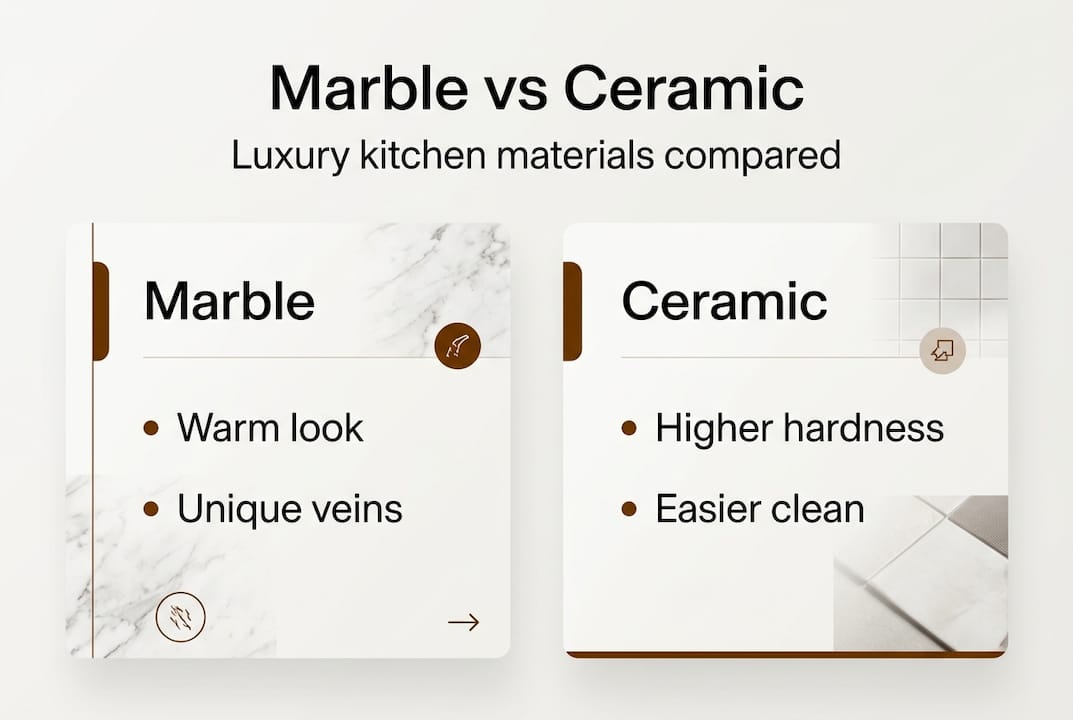
Maintenance requirements create the most significant practical distinction. Marble demands regular sealing every 6 to 12 months and careful cleaning with pH-neutral products to prevent etching from acidic substances. Ceramic tiles tolerate harsh cleaners and require only basic mopping, making them dramatically easier to maintain over decades of use.
Marble maintenance essentials:
- Seal surfaces every 6 to 12 months with quality penetrating sealer
- Clean only with pH-neutral products designed for natural stone
- Wipe spills immediately to prevent staining and etching
- Avoid acidic cleaners, vinegar, and abrasive scrubbing pads
Pro Tip: Test your marble’s seal by placing a few drops of water on the surface. If water beads up, the seal is intact. If it darkens the stone within 10 minutes, resealing is needed.
Family dynamics significantly influence material choice. Households with young children or pets may find ceramic’s forgiving nature more practical, while empty nesters or luxury-focused homeowners often prioritize marble’s beauty. The marble tile vs ceramic comparison ultimately requires honest assessment of your household’s usage patterns and maintenance commitment.
Cost considerations and typical applications for marble over ceramic
Budget planning reveals substantial differences between marble and ceramic investments. Material and installation costs for marble typically range from $8 to $30 per square foot installed, while ceramic tiles cost $2 to $20 per square foot, making marble roughly 2 to 3 times more expensive upfront. This premium reflects both the natural stone’s rarity and the specialized labor required for proper installation.
Lifetime ownership costs extend beyond initial installation. Marble requires periodic professional sealing, specialized cleaning products, and occasional restoration work to maintain its appearance. These ongoing expenses add hundreds to thousands of dollars over the material’s lifespan, depending on square footage and usage intensity.
| Cost Factor | Marble | Ceramic |
|---|---|---|
| Material Cost | $5 to $25 per sq ft | $1 to $15 per sq ft |
| Installation Labor | $3 to $5 per sq ft | $1 to $5 per sq ft |
| Annual Sealing | $200 to $500 | Not required |
| Specialized Cleaners | $50 to $100 yearly | $20 to $40 yearly |
| Expected Lifespan | 25 to 50 years | 20 to 50 years |
Both materials offer impressive longevity when properly maintained, but they age differently. Marble develops a distinguished patina over decades, with subtle wear patterns adding character that many homeowners cherish. Ceramic maintains its original appearance indefinitely but lacks the evolving beauty that makes aged marble so desirable in historic and luxury properties.
Ideal marble applications that justify premium costs:
- Powder room floors and walls for maximum luxury impact in compact spaces
- Master bathroom vanity surrounds and shower feature walls
- Kitchen backsplashes and island waterfall edges as focal points
- Fireplace surrounds and entryway statement floors
- Low-traffic hallways in executive homes
Ceramic proves more practical for high-traffic kitchen floors, children’s bathrooms, mudrooms, and laundry areas where spills and heavy use are inevitable. The durability advantage outweighs aesthetic considerations in these functional spaces, making ceramic the smarter long-term choice.
Pro Tip: Maximize your marble investment by using it strategically in high-visibility, low-traffic areas while reserving ceramic for behind-the-scenes workhorse spaces. This hybrid approach delivers luxury where it matters most without overspending.
Resale value calculations favor marble in upscale markets. Luxury home buyers actively seek premium natural stone finishes, often viewing marble as a non-negotiable feature in executive properties. The value marble adds to home appraisals frequently exceeds the installation cost differential, particularly in competitive real estate markets where distinctive finishes separate premium listings from standard offerings.
Expert tips for using marble wisely over ceramic in U.S. home remodels
Strategic material placement maximizes marble’s benefits while minimizing its vulnerabilities. Reserve marble primarily for vertical applications and low-traffic horizontal surfaces where its beauty shines without excessive wear exposure. Accent walls, vanity tops, and decorative niches showcase marble’s elegance while avoiding the durability challenges of high-traffic flooring.
Kitchen applications require careful consideration. Avoid marble flooring in active kitchens unless you commit to honed finishes and rigorous sealing schedules. Polished marble floors become slippery when wet and show every scratch from dropped utensils. Instead, use marble for backsplashes, island sides, and range hood surrounds where visual impact matters more than durability.
Surface finish selection dramatically affects marble’s practicality. Honed finishes hide scratches and etching better than polished surfaces, making them preferable for horizontal applications. Polished marble delivers maximum visual drama but requires meticulous care to maintain its mirror-like finish. Consider your household’s lifestyle honestly before committing to high-maintenance polished installations.
Strategic marble selection guidelines:
- Use lighter colored marbles like Carrara or Calacatta in smaller bathrooms to enhance perceived space
- Choose dramatic veining for feature walls where bold patterns create focal points
- Reserve subtle, consistent patterns for larger floor installations to avoid visual chaos
- Match marble tone to existing fixtures and cabinetry for cohesive design
Lifestyle factors should drive material decisions more than aesthetic preferences alone. Families with young children, large dogs, or frequent entertaining may find ceramic’s resilience more compatible with daily reality. Empty nesters, luxury-focused buyers, and homeowners willing to invest in proper maintenance can fully enjoy marble’s benefits without compromise.
Resale market positioning influences smart material choices. In luxury neighborhoods where buyers expect premium finishes, marble installations signal quality and justify asking prices. In mid-market areas, ceramic’s practicality may appeal more to value-conscious buyers who prioritize low maintenance over luxury aesthetics.
Pro Tip: Before finalizing marble selections, request samples to test in your actual space under different lighting conditions. Natural and artificial light dramatically affect how veining and color appear, and samples prevent costly mistakes.
Maintenance commitment separates successful marble owners from frustrated ones. Establish a sealing schedule immediately after installation and stick to it religiously. Purchase pH-neutral cleaners specifically formulated for natural stone, and educate all household members about marble’s sensitivity to acids. Simple prevention measures preserve marble’s beauty for generations.
Professional consultation adds value to marble projects. Experienced installers understand substrate preparation, proper sealing techniques, and layout strategies that maximize visual impact. The modest additional cost for expert installation prevents expensive repairs and ensures your marble investment performs beautifully for decades. Work with specialists who regularly handle natural stone rather than general tile contractors.
Explore premium marble options at Surfaces Galore
Transform your kitchen and bathroom remodeling vision into reality with Surfaces Galore’s curated collection of premium marble tiles and slabs. Our direct import model delivers authentic Italian and Turkish marble at competitive prices, making luxury accessible for discerning homeowners nationwide. Expert staff provide personalized guidance to match marble selections with your specific design goals and lifestyle requirements.
Explore our inspiration galleries showcasing real installations across California and beyond, demonstrating how strategic marble placement elevates ordinary spaces into extraordinary environments. Our blog resources offer detailed comparisons and expert insights to support confident material decisions. Visit Surfaces Galore to discover why architects, contractors, and homeowners trust us for premium natural stone that combines timeless beauty with lasting value.
FAQ
Is marble suitable for kitchen floors compared to ceramic?
Marble can work on kitchen floors if you choose honed finishes and maintain rigorous sealing schedules, but ceramic tiles offer superior durability and stain resistance for heavy kitchen use. The decision depends on traffic levels and your willingness to invest in ongoing marble maintenance. Most experts recommend ceramic for primary kitchen flooring and marble for backsplashes or island features.
How does marble affect home resale value versus ceramic tile?
Marble generally increases perceived home value and luxury appeal significantly more than ceramic in upscale markets. Buyers actively seeking executive properties expect premium materials like marble in luxury remodels, often justifying higher asking prices. The value marble adds typically exceeds the cost differential in competitive real estate markets.
What maintenance does marble require that ceramic does not?
Marble requires routine sealing every 6 to 12 months to prevent stains and etching from acidic substances. You must use gentle, pH-neutral cleaners specifically designed for natural stone, unlike low-maintenance ceramic that tolerates harsh cleaning products. Immediate spill cleanup is essential for marble, while ceramic forgives delayed cleaning without permanent damage.
Can I mix marble and ceramic in the same bathroom?
Mixing marble and ceramic creates practical, cost-effective bathroom designs that balance luxury with functionality. Use marble for high-visibility areas like vanity tops and shower feature walls, then install ceramic for floors and less prominent surfaces. This hybrid approach delivers visual impact where it matters while maintaining budget discipline and practical durability.
Does marble work in humid climates like Florida or coastal regions?
Marble performs well in humid climates when properly sealed and maintained, though the moisture requires more frequent sealing intervals. Coastal homeowners should expect to reseal marble surfaces every 6 months rather than annually. Ensure excellent bathroom ventilation to minimize moisture exposure and prevent mold growth in grout lines surrounding marble installations.
Leave a comment