

Why Use Marble in Wet Areas: Beauty and Function

Choosing the perfect surface for a high-end California bathroom or kitchen feels even more rewarding when every detail elevates beauty and performance. Marble stands apart, bringing refined luxury and impressive durability to wet area renovations. Its metamorphic composition allows for stunning high-polish finishes and excellent water resistance, making it an intelligent choice for those seeking both visual impact and lasting value. This overview highlights what makes marble uniquely compelling for spaces where moisture and style must go hand in hand.
Table of Contents
- Marble In Wet Areas: Defining The Appeal
- Popular Marble Types For Wet Spaces
- Key Features: Durability, Water Resistance, And Safety
- Installation And Ongoing Care Requirements
- Risks, Costs, And Smart Alternatives
Key Takeaways
| Point | Details |
|---|---|
| Marble’s Aesthetic and Functional Appeal | Marble offers exceptional visual beauty and remarkable performance in wet areas, making it ideal for bathrooms and kitchens. |
| Durability and Safety Considerations | Proper sealing and finish selection are crucial for minimizing slip hazards and maximizing moisture resistance. |
| Installation and Maintenance Importance | Professional installation and ongoing maintenance are essential to ensure marble’s longevity and aesthetic appeal. |
| Cost and Alternatives | While marble provides a luxurious look, alternatives like granite and engineered quartz often offer lower maintenance and higher durability at competitive prices. |
Marble in Wet Areas: Defining the Appeal
Marble represents an extraordinary natural stone solution for wet areas, blending unparalleled aesthetic elegance with remarkable functional performance. Its metamorphic composition provides unique characteristics that make it an exceptional choice for bathrooms, kitchens, and other moisture-prone spaces. Marble’s crystalline structure allows it to achieve a stunning high-polish finish while maintaining impressive durability.
The appeal of marble in wet areas extends far beyond mere visual beauty. This sophisticated stone offers several critical advantages:
- Exceptional aesthetic versatility with multiple color and pattern options
- Low porosity when properly sealed, reducing water absorption
- Ability to create seamless, luxurious design environments
- Natural cooling properties ideal for warm spaces
- High-end visual appearance that increases property value
Architectural experts recognize marble’s remarkable potential in design. Marble features prominently in significant U.S. architectural spaces precisely because of its unique combination of beauty and resilience. Its capacity to withstand moisture while maintaining structural integrity makes it an intelligent selection for areas requiring both performance and sophistication.
Pro tip: Always work with a professional stone specialist to ensure proper marble selection, sealing, and maintenance for wet area applications.
Popular Marble Types for Wet Spaces
Marble types offer designers and homeowners an incredible range of options for creating stunning wet area environments. Two primary marble varieties stand out for their unique characteristics: calcite and dolomite marble. Each type brings distinct performance attributes that make them suitable for different wet space applications.
The most sought-after marble varieties for wet areas include:
- Carrara White: Classic Italian marble with soft gray veining
- Calacatta Gold: Luxurious white marble with dramatic gold-toned veins
- Statuario: Highly prized white marble with bold, distinctive veining
- Green Serpentine: Unique green marble known for exceptional hardness
- Black Marble: Dramatic option for creating bold design statements
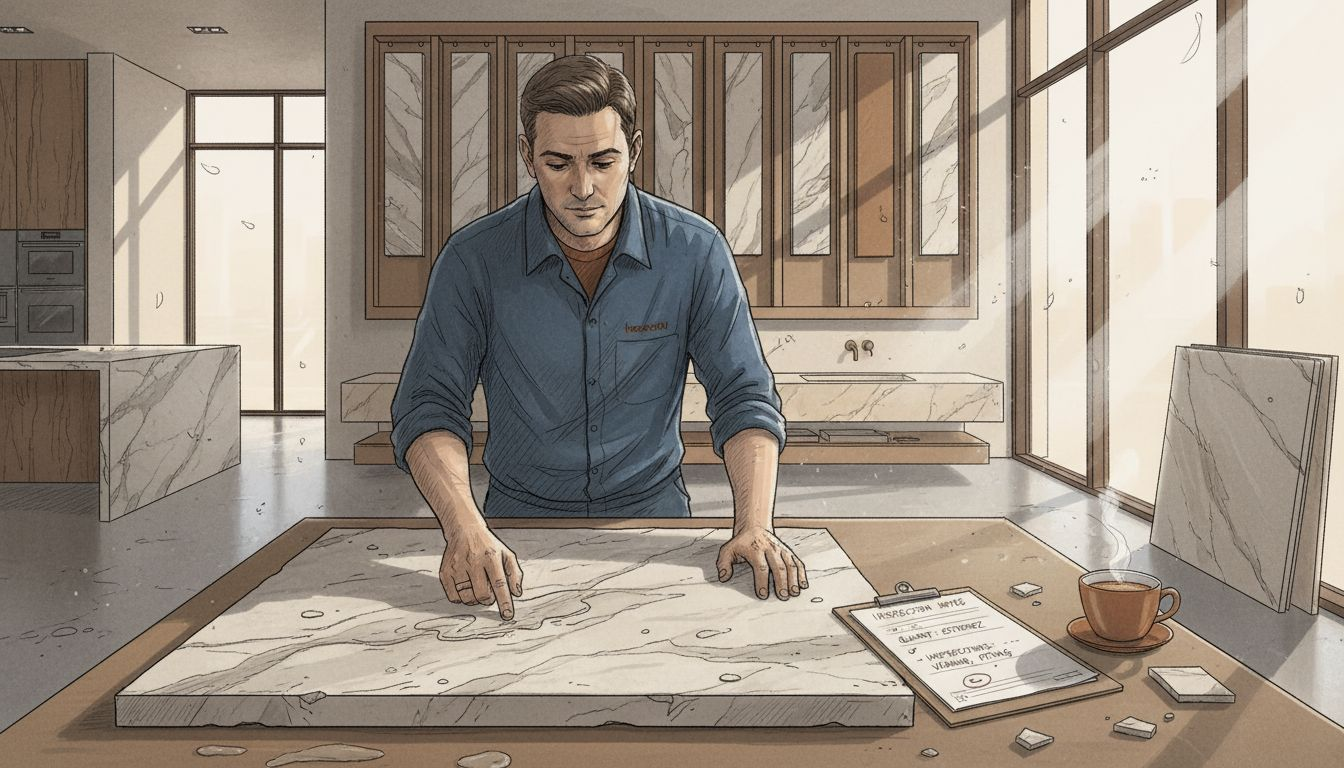
Vermont’s marble industry highlights the remarkable diversity of marble types available for design professionals. Commercial names like ‘French gray’ and ‘Champlain black’ demonstrate the nuanced options designers can select, each offering unique aesthetic and functional properties for wet environments.
Architectural considerations play a crucial role in marble selection. Dolomitic marble, for instance, provides superior resistance to acid and chemical exposure, making it an intelligent choice for kitchens and bathrooms where cleaning products and potential spills are common.
Pro tip: Always consult a stone professional to understand the specific performance characteristics of your chosen marble variety before installation in wet spaces.
Key Features: Durability, Water Resistance, and Safety
Marble’s performance in wet areas depends on several critical factors that impact its long-term functionality and aesthetic appeal. Marble’s crystalline structure provides inherent durability, but requires strategic consideration to maximize its potential in moisture-rich environments.
Key durability and safety features of marble in wet spaces include:
- Exceptional hardness and resistance to physical wear
- Low porosity when properly sealed
- Non-combustible material with high thermal stability
- Natural resistance to bacterial growth
- Ability to maintain aesthetic appeal under consistent moisture exposure
Safety considerations in wet environments are paramount when selecting marble. The surface finish plays a crucial role in preventing slip hazards, with different treatments offering varying levels of traction. Polished marble, while visually stunning, can become slippery when wet, necessitating careful surface selection and potential additional treatments to enhance grip.
Chemical stability remains another critical aspect of marble’s performance. The stone is chemically stable under neutral conditions but becomes vulnerable when exposed to acidic substances. This characteristic demands careful maintenance and protective sealing to prevent structural degradation in wet areas like bathrooms and kitchens.
Pro tip: Consult a professional stone specialist to select the most appropriate marble finish and sealing technique for your specific wet area application.
The table below summarizes key marble finishes for wet areas and their functional impact:
| Finish Type | Visual Appeal | Traction When Wet | Typical Use Location |
|---|---|---|---|
| Polished | High-gloss, reflective | Low, can be slippery | Walls, countertops |
| Honed | Satin, matte surface | Moderate, better grip | Floors, shower surrounds |
| Tumbled | Textured, antique look | High, slip-resistant | Floors, shower bases |
Installation and Ongoing Care Requirements
Marble installation requires meticulous planning and expert execution to ensure long-lasting performance in wet environments. Proper substrate preparation is the foundation of a successful marble installation, involving careful assessment of moisture barriers, structural integrity, and precise alignment techniques.
Key steps for professional marble installation include:
- Thoroughly inspect and level the underlying surface
- Apply high-quality waterproof membrane
- Use specialized marble-specific adhesives
- Implement precise grouting techniques
- Create adequate drainage slopes
- Allow proper curing time before final use
Cleaning and maintenance strategies are crucial for preserving marble’s aesthetic and functional qualities. Homeowners must avoid acidic or abrasive cleaning products that can damage the delicate stone surface. Regular sealing helps maintain water resistance and protects against potential staining or degradation.
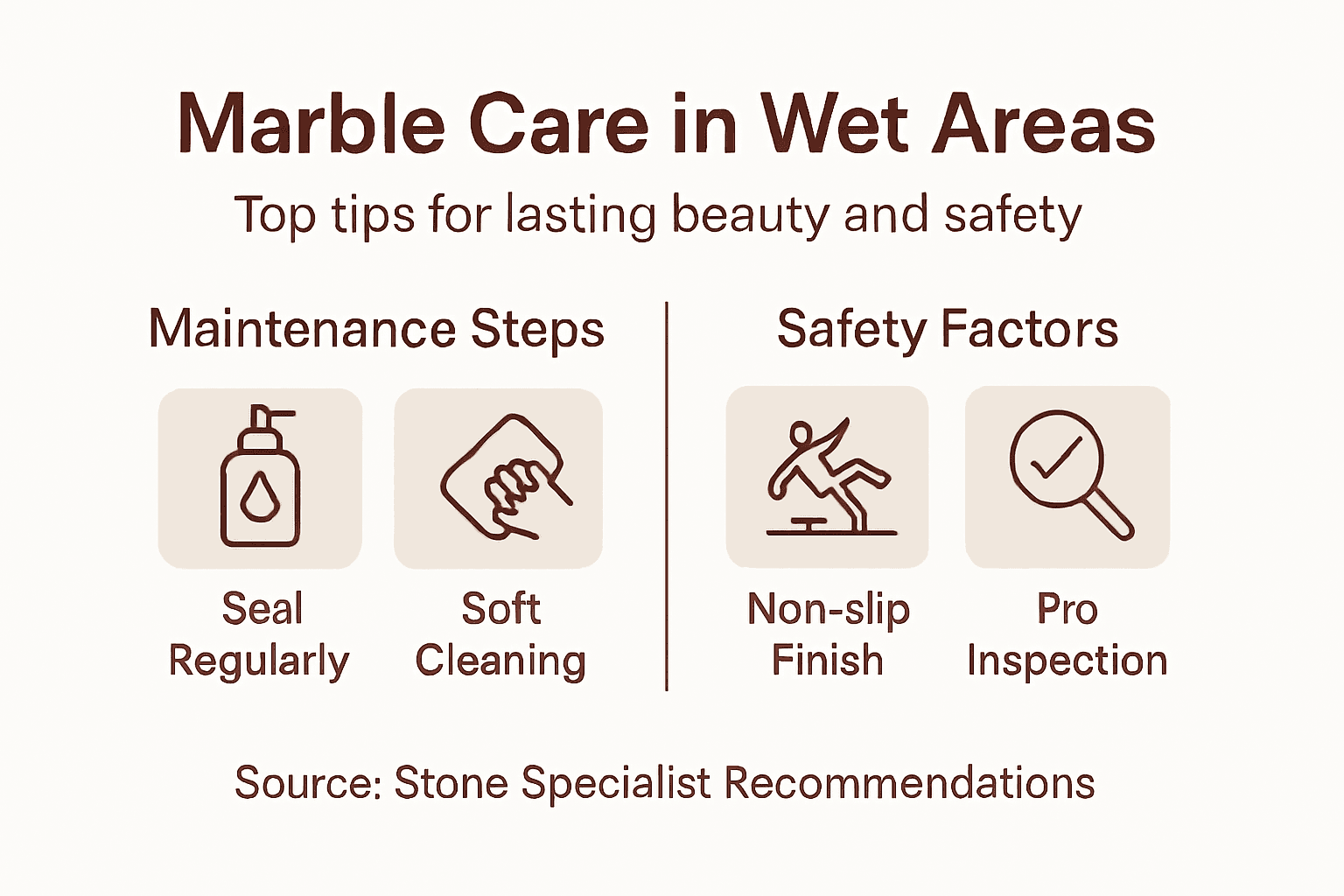
Ongoing care requires a systematic approach to marble preservation. Periodic professional inspections can identify early signs of wear, potential water damage, or surface degradation. This proactive maintenance ensures that marble surfaces remain beautiful and functional for decades, protecting your significant investment in natural stone design.
Pro tip: Schedule professional marble maintenance annually to catch and address potential issues before they become costly repairs.
Risks, Costs, and Smart Alternatives
Marble’s inherent risks in wet areas demand careful consideration before installation. Potential challenges include chemical deterioration from acidic exposure, surface wear, and potential safety issues related to slipperiness. These factors significantly impact long-term performance and maintenance requirements.
Key risks associated with marble in wet spaces include:
- High initial installation costs
- Vulnerability to acid-based cleaning products
- Potential surface etching and staining
- Higher maintenance requirements
- Increased slip hazards when polished
- Limited chemical resistance
Smart alternatives offer compelling alternatives for homeowners seeking durability and lower maintenance. Engineered quartz, porcelain tiles, and granite provide improved chemical resistance and more predictable performance characteristics. These materials often deliver similar aesthetic appeal with reduced long-term maintenance challenges.
Cost considerations extend beyond initial installation. While marble represents a premium material, potential repair and maintenance expenses can substantially increase total investment. Homeowners must balance the luxurious aesthetic against practical performance metrics, evaluating total lifecycle costs rather than just upfront expenses.
Here is a comparison of marble, granite, engineered quartz, and porcelain for wet area applications:
| Material | Water Resistance | Maintenance Needs | Typical Cost (per sq. ft.) |
|---|---|---|---|
| Marble | Moderate when sealed | High, periodic sealing | $50–$150 |
| Granite | High when sealed | Moderate, needs sealing | $40–$120 |
| Engineered Quartz | Very high, non-porous | Low, easy cleaning | $60–$140 |
| Porcelain Tile | Excellent, fully impervious | Very low, simple upkeep | $5–$35 |
Pro tip: Request comprehensive lifecycle cost analysis from stone professionals before committing to marble installation in wet areas.
Elevate Your Wet Area Designs with Premium Marble from Surfaces Galore
Choosing the perfect marble for wet areas can be challenging. You need a stone that balances stunning beauty with durability, water resistance, and safety. The article highlights key concerns such as proper sealing, slip resistance, and long-term maintenance. At Surfaces Galore, we understand these challenges and specialize in offering authentic, high-quality marble varieties that are ideal for bathrooms, kitchens, and other moisture-prone spaces. Our carefully selected marble ensures you get the elegance you desire without compromising on performance.
Explore our extensive collection of marble and travertine tiles, mosaics, and decorative pieces that meet the highest standards for wet environment applications. Discover our premium natural stone solutions designed to deliver lasting beauty and resilience.
Ready to transform your wet areas into luxurious and functional spaces? Visit Surfaces Galore now to browse our exclusive marble options and consult with our experts who can guide you through proper selection and maintenance. Take the first step toward your dream design by choosing durable, stylish marble that stands the test of time.
Frequently Asked Questions
What are the benefits of using marble in wet areas?
Marble offers exceptional aesthetic appeal, low porosity when sealed, and natural cooling properties, making it ideal for moist environments. It also increases property value due to its luxurious appearance.
How do I maintain marble in wet areas?
Regular maintenance includes avoiding acidic or abrasive cleaners, periodic sealing to enhance water resistance, and professional inspections to catch potential issues early.
What types of marble are suitable for wet areas?
Popular types for wet areas include Carrara White, Calacatta Gold, Statuario, Green Serpentine, and Black Marble, each offering unique aesthetic and performance benefits.
Is polished marble safe to use in wet areas?
Polished marble can be slippery when wet, so while it is visually stunning, it’s important to consider alternative finishes or additional treatments to enhance grip in wet environments.
Leave a comment