
What is paver stone? A complete guide for outdoor spaces

TL;DR:
- Paver stones are modular, interlocking units designed for durable, customizable outdoor surfaces that can be repaired individually. They outperform poured concrete and asphalt in long-term durability, aesthetic variety, and environmental impact through easier repairs and increased sustainability. Regular maintenance, sealing, and proper installation are essential for their longevity and aesthetic appeal over decades.
Walk into any home improvement store and you’ll find a dozen surface options for your patio, driveway, or walkway. Most homeowners assume concrete is concrete and stone is stone, but paver stones are a different category entirely. They bring together durability, visual flexibility, and a modular design that poured surfaces simply cannot match. This guide breaks down what paver stones actually are, which materials perform best for each application, how they stack up against alternatives, and how to keep them looking great for decades.
Table of Contents
- Defining paver stone: What it is and why it matters
- The main types of paver stones (with pros and cons)
- Where and how are paver stones used?
- Comparing paver stones with other surface options
- Caring for and maintaining paver stones
- Our perspective: Why paver stone is worth knowing (and what most guides miss)
- Ready to transform your outdoor space with paver stones?
- Frequently asked questions
Key Takeaways
| Point | Details |
|---|---|
| Multiple material options | Paver stones are available in concrete, clay brick, and a range of natural stones to fit diverse project needs. |
| Flexible and repairable | Unlike poured surfaces, paver stones can be easily replaced or repaired as needed. |
| Ideal for outdoor uses | They are perfect for patios, driveways, walkways, pool areas, and more thanks to their durability and style. |
| DIY and professional friendly | Paver stones support both simple home projects and ambitious designer installations with professional flair. |
| Longevity and value | With proper maintenance, high-quality paver surfaces can last for decades, boosting curb appeal and property value. |
Defining paver stone: What it is and why it matters
Now that you know this guide will answer the real question, what is a paver stone and why should you care, let’s start by clearly defining the basics.
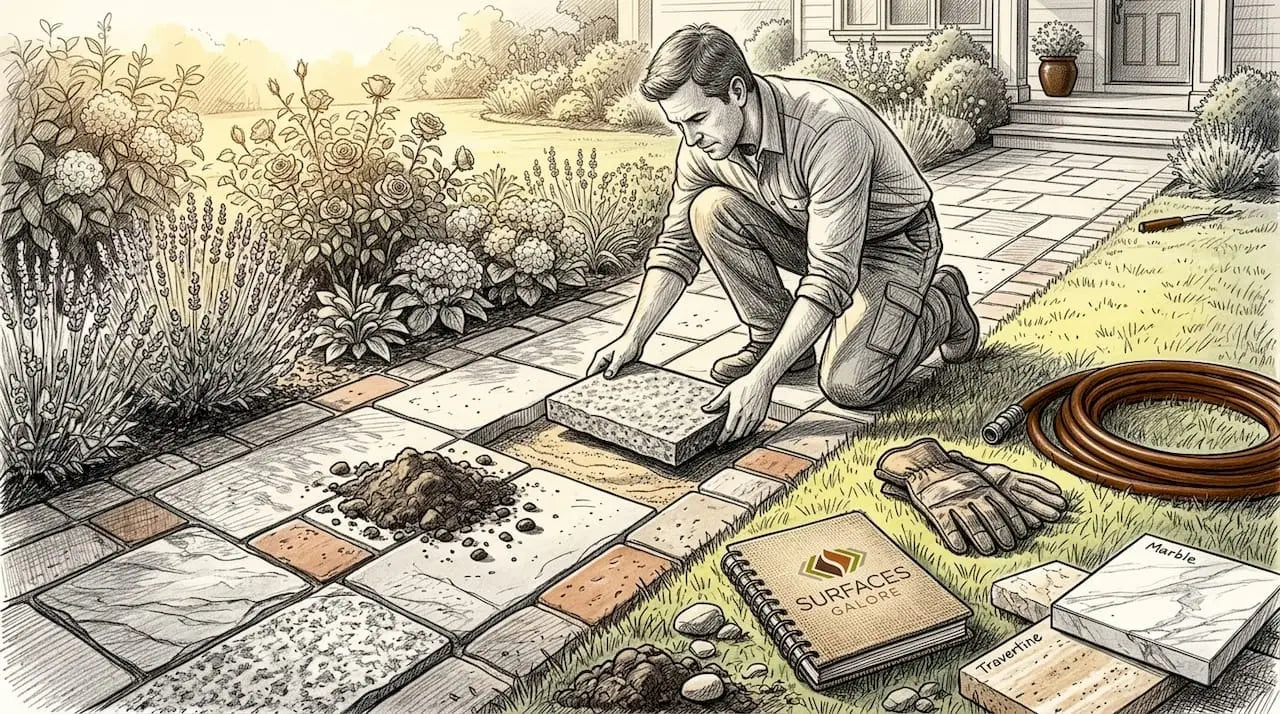
A paver stone is an individual, pre-manufactured unit designed to be laid side by side with other units to create a stable, load-bearing surface. Unlike poured concrete, which is mixed and set as one continuous slab, pavers are placed one at a time over a compacted base of gravel and sand. That distinction matters more than most people realize.
The key characteristics that set paver stones apart include:
- Modularity: Each unit is independent, so one cracked or stained piece can be removed and replaced without disturbing the rest of the surface.
- Interlocking installation: Many paver systems use an interlocking pattern that distributes weight across multiple units, reducing the chance of cracking under heavy loads.
- Strong load-bearing capacity: Quality pavers handle foot traffic, vehicle weight, and freeze-thaw cycles without breaking down quickly.
- Design flexibility: Because pavers come in different shapes, sizes, and colors, you can create custom patterns that poured surfaces cannot replicate.
Common types include concrete pavers, clay brick pavers, and natural stone pavers) such as granite, limestone, flagstone, and travertine, each with unique textures and durability profiles. If you want to understand how each natural stone types compares before making a decision, that resource is a good starting point.
Pro Tip: Before buying any pavers, confirm the compressive strength rating on the product spec sheet. For driveways, look for pavers rated above 8,000 PSI. For patios and walkways, anything above 3,000 PSI is generally sufficient.
Paver stones are growing in popularity because they solve a real problem: outdoor surfaces take a beating from weather, vehicles, and time. A surface you can repair one piece at a time is far more practical than one that requires a full replacement when it cracks.
The main types of paver stones (with pros and cons)
With a solid definition in mind, let’s examine the main types of paver stone and how they compare side-by-side.
There are three primary material categories, and each serves a different type of homeowner, budget, and project goal.
Concrete pavers are the most widely used option for DIY projects. They are manufactured in uniform shapes and sizes, which makes installation straightforward and predictable. They come in a wide range of colors and finishes, from smooth to textured, and they are generally the most affordable entry point. The downside is that concrete can fade over time when exposed to UV light, and the color goes all the way through on some products but is only a surface coating on others.
Clay brick pavers offer a classic, warm aesthetic that concrete struggles to replicate authentically. They are fired at high temperatures, which gives them excellent compressive strength. However, clay brick pavers may fade or absorb water) over time, which can lead to staining or efflorescence (a white mineral deposit that appears on the surface). They tend to cost more than concrete but less than premium natural stone.
Natural stone pavers, including granite, limestone, flagstone, and travertine, represent the premium end of the market. They offer genuinely unique textures and color variation because no two pieces are identical. Natural stone pavers can exceed 15,000 PSI) in compressive strength in some cases, making them among the most durable surfaces available. The trade-off is cost and variability. Natural stone requires more careful selecting natural stone for your specific climate and use case.
Here is a side-by-side comparison to help you decide:
| Feature | Concrete pavers | Clay brick pavers | Natural stone pavers |
|---|---|---|---|
| Cost | Low to moderate | Moderate | Moderate to high |
| Durability | Good (3,000+ PSI) | Very good | Excellent (up to 15,000+ PSI) |
| Aesthetics | Uniform, customizable | Classic, warm | Unique, premium |
| Maintenance | Low | Moderate | Low to moderate |
| Fade resistance | Moderate | Lower | High |
| Best use | DIY patios, walkways | Traditional gardens | Driveways, pool decks, luxury patios |
For a broader look at paver stone types and how they apply to specific outdoor environments, that resource covers pool deck applications in particular detail.
Pro Tip: If you want the look of natural stone without the highest price point, consider limestone or travertine. Both offer premium aesthetics at a more accessible cost than granite, and both perform exceptionally well in outdoor climates. Checking out best natural stone suppliers can help you source quality material at fair prices.
One thing most buyers overlook is the long-term color story. Concrete fades predictably. Natural stone develops a patina that many homeowners actually prefer over time. Clay brick sits somewhere in between, aging gracefully in some climates but showing wear more visibly in others.
Where and how are paver stones used?
Understanding what paver stones can do leads us naturally to their real-world applications around the home.
Paver stones are used for patios, driveways, walkways, and pool decks), but that list only scratches the surface. Here are the most popular applications:
- Patios: The most common residential use. Pavers create a stable, attractive outdoor living area that holds up to furniture, foot traffic, and weather.
- Driveways: Heavy-duty pavers handle vehicle weight without cracking, and individual units can be replaced if one shifts or breaks.
- Walkways and garden paths: Smaller pavers or flagstone pieces create winding paths that blend naturally into landscaping.
- Pool decks: Pavers are slip-resistant and stay cooler underfoot than solid concrete, making them a popular choice around pools. Exploring the outdoor marble tiling process gives you a sense of how premium stone performs in wet environments.
- Retaining walls and steps: Larger paver units work well for vertical and transitional structures in sloped yards.
The modular nature of pavers is what makes them so adaptable. You can create herringbone, basket weave, running bond, or circular fan patterns depending on your aesthetic goals. Each pattern also affects structural performance, with herringbone being particularly strong for driveways because it distributes load in multiple directions simultaneously.
Planning a DIY paver project? Follow these three steps to set yourself up for success:
- Prepare the base properly. Excavate at least 6 to 8 inches deep, add a compacted gravel base, and finish with a 1-inch layer of sand. A weak base is the number one reason paver surfaces fail early.
- Choose your pattern before you start. Lay out a dry run of your pavers to confirm the pattern works with your space dimensions. This prevents awkward cuts and gaps at the edges.
- Seal after installation. Apply a quality sealer once the pavers are set and jointing sand is in place. This locks the sand, prevents weed growth, and protects the surface from stains.
“Paver installations done with proper base preparation and quality materials routinely outlast poured concrete surfaces by 20 or more years, especially in climates with significant freeze-thaw cycles.” — General industry consensus among landscape contractors
For homeowners interested in how paving choices connect to broader environmental goals, the sustainable stone benefits of natural materials are worth reading before you finalize your selection. Understanding pavers vs concrete in detail will also help you make a more confident final decision.
Comparing paver stones with other surface options
With examples in mind, you’ll want to weigh how paver stones measure up against other popular options.
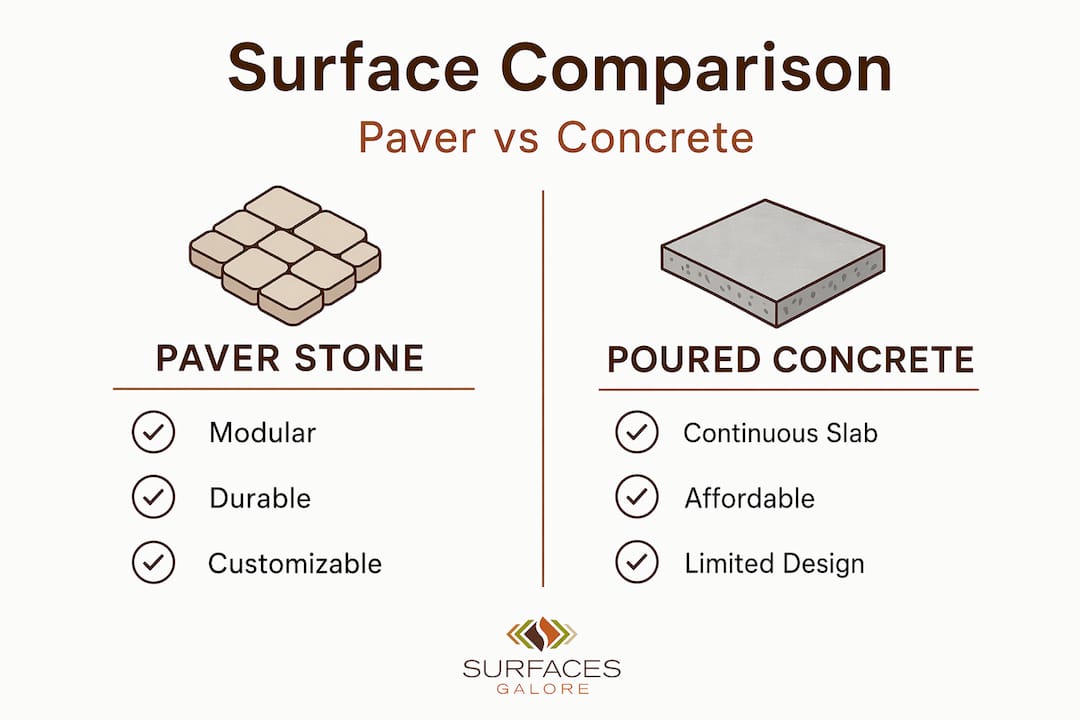
The two most common alternatives to paver stones are poured concrete and asphalt. Both have legitimate advantages, particularly for large-scale projects where budget is the primary concern. But they also come with real limitations that homeowners often discover only after installation.
Poured concrete is strong and relatively affordable upfront. The problem is that it sets as one continuous slab, and when it cracks (and it will crack eventually, especially in climates with temperature swings), the repair is visible and often requires resurfacing large sections. Asphalt is flexible and handles freeze-thaw cycles better than concrete, but it requires resealing every few years and softens in extreme heat, which can cause rutting under heavy vehicles.
Natural stone pavers with durability exceeding 15,000 PSI) outperform both alternatives in long-term structural integrity. And because they are modular, a single damaged paver can be swapped out in under an hour without any visible seam.
| Feature | Paver stones | Poured concrete | Asphalt |
|---|---|---|---|
| Upfront cost | Moderate to high | Low to moderate | Low |
| Installation time | Moderate | Fast | Fast |
| Durability | Excellent | Good | Moderate |
| Repair process | Replace individual units | Patch or resurface | Patch or reseal |
| Aesthetic options | High | Low | Very low |
| Maintenance frequency | Low | Low to moderate | High |
The visual customization gap is significant. Poured concrete can be stamped or stained, but it still reads as concrete up close. Pavers, especially natural stone, bring genuine texture and character that stamped concrete cannot authentically replicate. If you want to see how stone surfaces elevate a space visually, the stone tile looks guide shows real-world examples worth browsing.
For pool deck projects specifically, the comparison between pavers vs poured concrete is particularly useful because slip resistance and heat retention become critical factors in that environment.
The bottom line: if your priority is the lowest possible upfront cost and you are not concerned about long-term repair flexibility, poured concrete or asphalt may work. But if you want a surface that ages well, repairs easily, and adds genuine curb appeal, paver stones are the stronger investment.
Caring for and maintaining paver stones
Once you’ve chosen and installed your paver stone surface, maintaining its appearance and strength is the next priority.
The good news is that paver maintenance is simpler than most people expect. A consistent routine prevents the buildup of grime, weeds, and staining that makes surfaces look neglected.
Follow these steps to keep your pavers in top condition year after year:
- Sweep regularly. Remove leaves, dirt, and debris weekly. Organic material left on pavers breaks down and can stain the surface or encourage moss growth in shaded areas.
- Spot-clean stains promptly. Oil, rust, and tannin stains (from leaves) are easiest to remove when fresh. Use a pH-neutral cleaner and a stiff brush. Avoid bleach on natural stone, as it can damage the surface.
- Apply polymeric sand to joints annually. Jointing sand prevents weeds from taking root between pavers and stabilizes the surface. Check the joints each spring and add sand where it has washed away.
- Seal every 2 to 3 years. A quality sealer protects against water absorption, UV fading, and staining. Natural stone pavers with durability exceeding 15,000 PSI) still benefit from sealing because it enhances color and reduces porosity.
- Inspect for shifting or settling. After winter, check for any pavers that have shifted due to freeze-thaw movement. Re-leveling a single paver takes minutes and prevents tripping hazards.
“The single biggest mistake homeowners make with pavers is skipping the sealer after installation. A good sealer applied within the first 30 days can double the effective lifespan of the surface finish.” — Landscape industry best practice
Understanding the different natural stone finishes available for your pavers will also help you choose a surface texture that is easier to maintain in your specific environment. Honed finishes, for example, show less surface variation but may require more frequent cleaning in high-traffic areas. Tumbled or brushed finishes hide minor dirt better between cleanings.
Pro Tip: For travertine pavers specifically, fill any natural pits or holes with grout before sealing. Unfilled travertine holds water and debris in those voids, which can accelerate staining. The travertine applications guide covers this in more detail and shows how travertine performs across different outdoor settings.
For a detailed comparison of long-term paver stone maintenance versus other surface types, that resource walks through real maintenance scenarios side by side.
Our perspective: Why paver stone is worth knowing (and what most guides miss)
Most articles about paver stones focus on aesthetics first. They show beautiful photos of travertine pool decks and herringbone driveways, and they tell you which material looks best. That is useful, but it misses the more important story.
The real value of paver stones is not how they look on day one. It is how they perform on year ten. We have seen homeowners choose poured concrete because it was $3 per square foot cheaper at installation, only to spend twice that amount on repairs within a decade. The math on pavers looks different when you factor in the cost of resurfacing a cracked concrete driveway versus replacing three individual pavers that shifted over winter.
Here is the insight most guides skip: modularity is a sustainability advantage, not just a convenience feature. When one paver fails, you replace one paver. You are not tearing out an entire slab and sending it to a landfill. That matters both financially and environmentally. The sustainable design benefits of natural stone go even further, since quarried stone requires far less energy to produce than manufactured concrete at scale.
We also think the renovation flexibility argument is underrated. Outdoor living spaces evolve. You might add a fire pit, expand a patio, or reroute a garden path in five years. With pavers, you can lift a section, adjust the layout, and relay the surface without any visible evidence of the change. With poured concrete, that same change leaves a permanent seam or requires a full pour.
The homeowners who get the most value from paver stones are the ones who stop thinking about them as a one-time purchase and start thinking about them as a long-term outdoor infrastructure investment. That shift in perspective changes which material you choose, how carefully you prepare the base, and how consistently you maintain the surface.
Ready to transform your outdoor space with paver stones?
With that perspective in mind, you may be wondering where to start your own transformation.
At Surfaces Galore, we work directly with homeowners, designers, and contractors who want premium natural stone without the premium markup. As a direct importer based in Anaheim, California, we carry an extensive selection of travertine, limestone, marble, and other natural stone options suited for outdoor paver projects of every scale.

Whether you are planning a travertine pool deck, a limestone garden path, or a full driveway renovation, our team can help you find the right material for your climate, budget, and design vision. We ship nationwide, and our product resources are built to help you make confident decisions before you buy. Visit Surfaces Galore to explore our full catalog and get inspired by real project examples from homeowners just like you.
Frequently asked questions
What’s the main difference between paver stones and poured concrete?
Paver stones are modular units installed individually, so a single damaged piece can be replaced without disturbing the rest of the surface. Poured concrete is a continuous slab that combines durability and versatility) in a single pour but requires patching or full resurfacing when it cracks.
Which paver stone material is best for driveways?
Concrete and natural stone pavers are the strongest choices for driveways because of their high load capacity. Natural stone pavers exceeding 15,000 PSI) in compressive strength are particularly well suited for heavy vehicle traffic.
Do paver stones require sealing?
Sealing is optional but strongly recommended, especially for brick and natural stone. Clay brick pavers may fade or absorb water) without a protective sealer, and natural stone benefits from reduced porosity and enhanced color retention.
How long do paver stone surfaces last?
Properly installed paver stones can last 25 to 50 years or more with routine maintenance. Natural stone pavers with durability exceeding 15,000 PSI) are among the longest-lasting outdoor surface options available to homeowners.

Leave a comment