
Tile finishes explained: choose right for any room

TL;DR:
- Tile finishes influence appearance, slip resistance, and maintenance needs in renovation projects.
- Matte, satin, and glossy are the most common, each suited to specific functional and aesthetic needs.
- Combining different finishes intentionally enhances design and optimizes performance in various room zones.
Tile finishes explained: choose right for any room
Walk into any tile showroom and you’ll notice the same thing: beautiful surfaces that all look slightly different depending on how the light hits them. That difference is the finish, and it’s doing a lot more work than most homeowners realize. Choosing a tile finish isn’t just a style call. The finish you pick affects whether your kitchen floor is slippery after a spill, whether your bathroom walls collect soap scum, and whether your investment lasts a decade or starts showing wear in a few years. This guide breaks down every major finish type, compares real-world performance, and helps you match the right finish to the right room so your renovation delivers beauty and function in equal measure.
Table of Contents
- What are tile finishes? The basics explained
- Matte, satin, and glossy: Comparing performance and style
- Special finishes: Textured, tumbled, and honed surfaces
- Key factors in choosing the right tile finish
- Expert tips for mixing and matching tile finishes
- Our perspective: Why practicality should lead your tile finish decision
- Transform your project with expert surface guidance
- Frequently asked questions
Key Takeaways
| Point | Details |
|---|---|
| Finish affects function | The tile finish impacts safety, cleaning, and durability in every room. |
| Context is key | Choose finishes based on room location, foot traffic, and moisture. |
| Mix with care | Combining different tile finishes can elevate style if chosen thoughtfully. |
| Samples matter | Always test tile samples at home in real lighting before deciding. |
What are tile finishes? The basics explained
Before you can make a smart choice, you need to understand what a tile finish actually is. In simple terms, a tile finish is the surface treatment applied to or achieved during the manufacturing process that determines how a tile looks, feels, and performs. It’s the final layer of character on the tile, and it controls everything from sheen and texture to porosity and slip-resistance.
Finishes are not just cosmetic decisions. They change the physical properties of the tile’s surface. A highly polished tile and a matte tile of identical material will behave very differently when wet, when cleaned, and when exposed to years of foot traffic. Knowing this upfront saves you from making a choice that looks stunning in the store but causes headaches at home.
Here’s a quick overview of the main finish types you’ll encounter:
- Matte finish: Low sheen, non-reflective surface. Hides dirt, dust, and minor scratches better than glossy alternatives. Slightly more porous, which means it can absorb stains if not sealed properly.
- Satin finish: A middle ground between matte and glossy. Offers a soft glow without the mirror-like reflection of polished tiles. Good balance of aesthetics and practicality.
- Glossy finish: High-shine, light-reflecting surface. Makes spaces feel larger and brighter. Shows smudges, water spots, and scratches more readily.
- Textured finish: Intentional surface relief or grip built into the tile. Maximizes traction underfoot, especially in wet areas.
- Honed finish: Smooth to the touch but without the shine of a polish. Achieved by stopping the grinding process before full buffing. Very popular for natural stone.
- Tumbled finish: Achieved by tumbling stone tiles in a drum with abrasive material, creating naturally worn, rounded edges. Gives a rustic, aged aesthetic.
- Brushed finish: Surface is brushed to reveal natural texture and grain without adding shine.
Each finish type was developed to solve a specific design or performance problem. Glossy tiles emerged as a way to maximize light in small or dark spaces. Textured and tumbled finishes were embraced to add safety and visual warmth. Matte and honed finishes rose in popularity as homeowners grew tired of high-maintenance shiny surfaces.
| Finish type | Sheen level | Best use | Slip resistance | Ease of cleaning |
|---|---|---|---|---|
| Matte | Low | Floors, walls | High | Moderate |
| Satin | Medium-low | Floors, walls | Medium-high | Good |
| Glossy | High | Backsplashes, walls | Low | Easy (but streaks) |
| Honed | Low-medium | Floors, walls | Medium | Moderate |
| Textured | None | Wet area floors | Very high | Harder |
| Tumbled | None | Accent walls, floors | High | Harder |
For practical guidance, matte or satin for floors and glossy for backsplashes reflects the standard recommendation across kitchen and bathroom applications, since each placement has its own demands. You can read more on our tile finishes overview for a deeper look at how finishes apply specifically to natural stone tiles like travertine and marble.
Understanding these basics puts you in control. Instead of picking a tile because it looked great under the showroom’s warm spotlights, you’ll know exactly which surface properties to prioritize for your specific renovation goals.
Matte, satin, and glossy: Comparing performance and style
Now that the main finishes are clear, it’s important to examine how each one stacks up in real renovation scenarios. The three most common finishes in kitchen and bathroom renovations are matte, satin, and glossy. Each has a loyal following for good reasons, and each has real trade-offs that deserve honest attention.
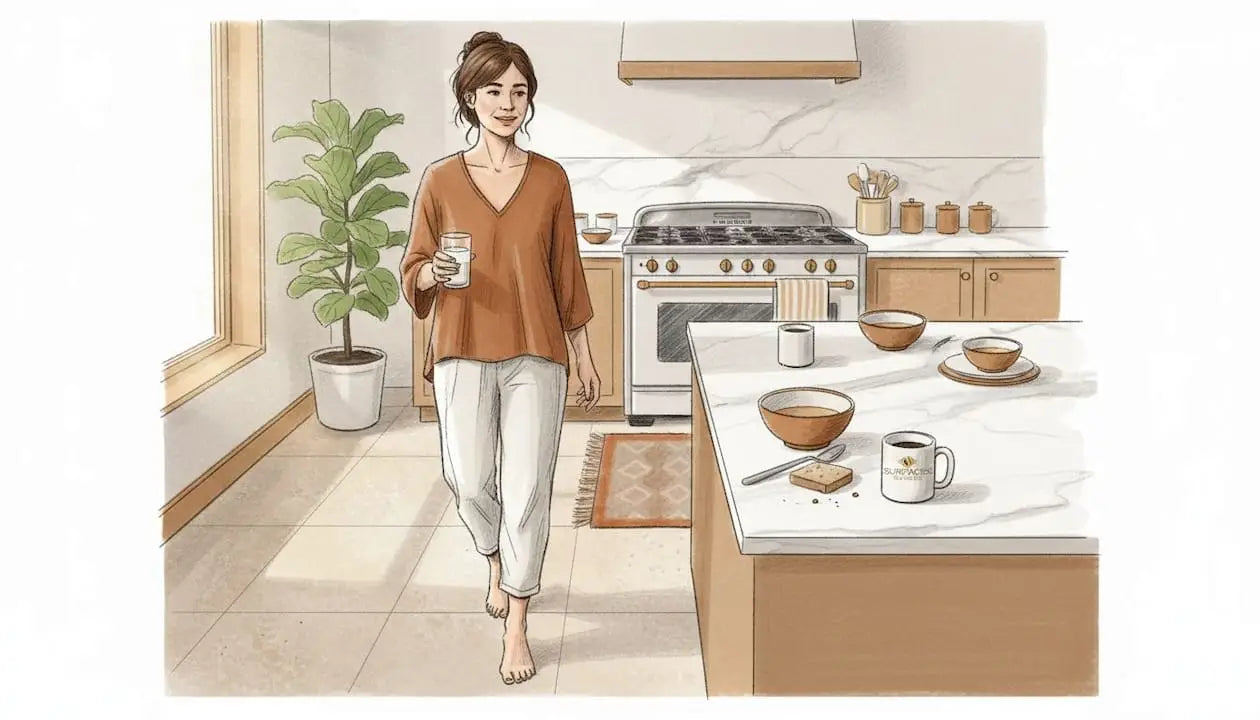
Matte tiles have a flat, non-reflective surface that absorbs light rather than bouncing it. This gives rooms a grounded, calm feel. In kitchens, matte floor tiles hide crumbs, dried water droplets, and light foot traffic marks remarkably well. You’re not constantly chasing smudges. The trade-off is that matte surfaces can be more porous, so they need proper sealing, particularly for natural stone. A quality sealer applied once or twice a year keeps matte tiles looking clean and prevents staining from cooking oils and food spills.
Satin tiles offer that low-key glow that many homeowners love because it feels elevated without being flashy. Satin finishes work particularly well in bathrooms where you want a spa-like quality without a surface that shows every water drop. They’re easier to clean than true matte tiles and offer decent grip underfoot. Many designers consider satin the smart default finish because it’s versatile enough to work on floors and walls alike.
Glossy tiles are the heavy hitters for visual impact. A glossy white subway tile on a kitchen backsplash reflects light back into the room, making even a compact kitchen feel open and airy. Glossy tiles are also genuinely easy to wipe clean since the dense, non-porous surface doesn’t absorb grease or moisture. The downside? Every water spot, fingerprint, and smudge is visible. In a busy household with kids or pets, glossy floors become a daily cleaning task.
Here’s a side-by-side look at how these three finishes compare across the factors that matter most for renovations:
| Factor | Matte | Satin | Glossy |
|---|---|---|---|
| Slip resistance | High | Medium-high | Low |
| Stain resistance | Moderate (seal required) | Good | Excellent |
| Smudge visibility | Low | Low-medium | High |
| Light reflection | None | Subtle | Strong |
| Best on floors | Yes | Yes | Caution |
| Best on walls/backsplash | Yes | Yes | Excellent |
| Cleaning frequency | Moderate | Moderate | Higher |
For kitchens, matte or satin for floors and glossy for backsplashes is the well-established guidance because each placement has such different requirements. Floors need grip and forgiveness for mess; backsplashes need easy wipe-downs and visual brightness.
Pro Tip: Don’t feel locked into one finish for the whole room. Pairing a honed or matte floor tile with a glossy accent or backsplash adds depth to the design and lets each surface do its best job. Check out backsplash finish options for inspiration on combining finishes effectively.
Some practical rules when choosing between these three:
- Use glossy tiles where cleaning is easy and slip-resistance isn’t critical (walls, backsplashes, above-counter areas)
- Use matte or satin where foot traffic is high and safety matters (kitchen floors, bathroom floors, hallways)
- Choose matte over satin when you want maximum camouflage for dirt and daily wear
- Choose satin over matte when you want a hint of elegance without the maintenance cost of glossy
For more guidance on floor tile decisions specifically, our guide on choosing kitchen and bathroom floors walks through material and finish combinations that work well together.
Special finishes: Textured, tumbled, and honed surfaces
Beyond the big three, several specialty finishes deserve attention for high-end results or problem-solving in tricky spaces. These finishes often show up in natural stone tile applications, and they add a level of character that polished or matte ceramic simply can’t replicate.
1. Honed finish A honed tile is smooth to the touch but lacks the reflective polish of a glossy tile. Think of it as the matte equivalent for natural stone like marble or travertine. The grinding process is stopped before the final buffing stage, leaving a surface that’s silky, refined, and understated. Honed marble is extremely popular for bathroom floors and feature walls because it feels luxurious without the aggressive shine. It’s also more forgiving than polished marble when it comes to showing scratches, since any light scuffs blend into the matte surface rather than catching the light. Learn more about how each treatment affects natural stone in our marble finishes explained guide.
2. Textured finish Textured tiles have deliberate surface relief, ridges, grooves, or a roughened surface, built into the tile to maximize traction. This is the go-to finish for wet zone floors: shower pans, pool surrounds, and outdoor patios. The texture interrupts the water film that forms on smooth tiles and dramatically reduces slip risk. The trade-off is cleaning. Those grooves and ridges can trap soap residue and mineral deposits, so textured tiles require more thorough scrubbing. A stiff brush and a pH-neutral cleaner work best.
3. Tumbled finish Tumbled tiles look like they were pulled from an ancient Roman courtyard, and that’s precisely the appeal. The tumbling process smooths sharp edges, softens corners, and creates natural variation in the surface. The result is a tile that feels handmade and aged. Tumbled travertine and tumbled limestone are especially sought after for Mediterranean or Tuscan-style kitchens, spa bathrooms, and outdoor entertaining areas. The rounded edges also make them comfortable underfoot compared to sharp-edged modern tiles. As noted in research on how finish affects surface performance, surface treatment has a direct impact on both the look and the functional lifespan of a material, and tile is no exception.
4. Brushed finish A brushed tile has been wire-brushed to lift and reveal the natural grain and texture of the stone or material. It sits between tumbled and honed in terms of character. You get visible texture and natural variation without the rounded, antiqued look of tumbled tiles. Brushed finishes are common in large-format floor tiles in contemporary spaces where designers want natural texture without a rustic feel.
“The surface finish you choose for natural stone isn’t just an aesthetic decision. It changes how the stone interacts with moisture, cleaning products, and foot traffic over years of use.” This is especially true in bathrooms and kitchens where tiles face daily exposure to water and cleaning chemicals.
Pro Tip: Use honed or textured tiles to solve the problem of glossy tiles in wet areas. If you love the look of polished marble but need it in a shower floor, opt for the honed version of the same marble. You keep the color and veining while gaining meaningful slip resistance.
For each of these specialty finishes, proper sealing is even more important than with standard matte or glossy tiles. Natural stone with a honed or tumbled finish tends to be more porous, meaning liquids and staining agents can penetrate more easily if the stone isn’t protected.
Key factors in choosing the right tile finish
With those options in mind, it’s time to turn theory into decisions by focusing on what matters most for your home. Every renovation is different, and the right finish depends on a set of real-life factors that go beyond personal taste.
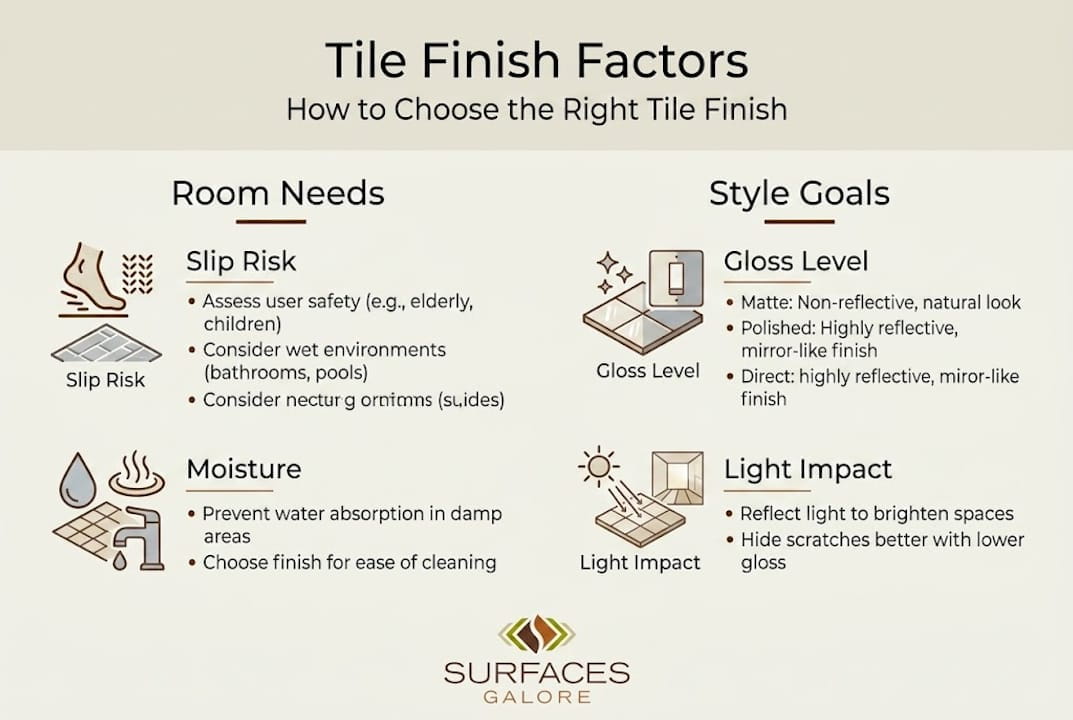
Traffic and use patterns How many people walk through the space daily? A busy family kitchen sees spills, tracked-in dirt, and constant foot traffic. A matte or satin tile handles this confidently. A glossy tile in the same space becomes a visual mess within hours. A serene guest bathroom that gets used twice a week can handle glossy tiles beautifully because the cleaning burden stays low.
Moisture levels Moisture fundamentally changes what finish is safe and practical. In shower floors and wet zones, slip resistance is non-negotiable. Textured or matte tiles are the clear choice. For bathroom walls above the waterline or backsplash areas behind a sink, glossy is perfectly safe and very practical for keeping surfaces clean. For more guidance on this, the bathroom tile selection tips resource offers useful direction on matching tile properties to bathroom-specific conditions.
Natural and artificial light Light is a powerful partner for tile finishes. A north-facing kitchen with limited natural light benefits enormously from glossy backsplash tiles that bounce available light back into the room. A sun-drenched bathroom can be grounded with matte or honed tiles that absorb rather than amplify the brightness. Always view tile samples in the actual room before committing, under both daylight and artificial light conditions.
Safety requirements This is especially critical for floors. Bathroom floors are among the most common locations for household slips and falls. Matte, textured, or tumbled finishes provide dramatically better grip than glossy when surfaces are wet. When choosing floor tiles for bathrooms, ask about the tile’s coefficient of friction, a measure of slip resistance. Tiles rated 0.6 or above are generally recommended for wet residential floors.
Ease of maintenance Be honest about your cleaning habits. Glossy tiles require frequent wiping to stay looking sharp. Matte tiles forgive infrequent cleaning but need occasional deep scrubbing and resealing. Textured tiles require the most effort to clean thoroughly. Match the finish to the time you’re realistically willing to invest in upkeep.
Here’s a quick checklist to guide your decision:
- Is this a floor or a wall/backsplash surface?
- Will this surface get wet regularly?
- How much daily traffic will it see?
- Is natural light limited or abundant in this room?
- Do you prefer low-maintenance surfaces?
- Are there children or elderly family members who need safer footing?
Our backsplash material guide helps narrow down finish and material choices for kitchen backsplashes specifically, while our bathroom wall tile workflow covers the sequencing of decisions for bathroom renovations from material selection through installation.
Expert tips for mixing and matching tile finishes
Finally, advanced renovators and designers often combine finishes for a layered, high-end result, and here’s how to do it right. Mixing finishes is one of the most effective design moves you can make, but it needs intention to work well.
Start with a clear finish hierarchy Decide which finish is the primary surface and which is the accent. In most kitchens, the floor finish is the anchor and the backsplash finish is the accent. A matte limestone floor paired with a glossy white subway tile backsplash creates contrast that feels deliberate and polished. Reversing the logic, glossy floors and matte backsplash, can work in some contemporary designs but requires careful material selection to avoid looking accidental.
Keep sheen contrast intentional The biggest mistake homeowners make when mixing finishes is using two similar sheen levels that don’t contrast clearly enough. A satin floor tile next to a satin wall tile often just looks like a mismatched pair rather than a design choice. Go for clear contrast: matte against glossy, or honed against polished. Matte floors paired with glossy backsplashes are a classic example of contrast that works because the function of each surface reinforces the finish choice.
Manage transitions between rooms When different finishes meet at a doorway or transition point, use a consistent color or material to tie them together. For example, if your kitchen uses a honed travertine tile and your adjacent dining area has a polished porcelain, choosing both in similar warm tones creates visual flow even when the finish changes. A sharp change in both finish and color at a transition point can feel jarring.
Avoid common mixing mistakes:
- Don’t mix more than two finish types in a single room. Three or more creates visual noise.
- Avoid mixing finishes within the same plane. Different finishes work best on different surfaces (floor vs. wall), not in a patchwork on the same wall.
- Don’t match texture styles that compete with each other. A heavily tumbled stone tile and a deeply textured ceramic create confusion rather than harmony.
- Skip trendy combinations in favor of ones that will still feel right in ten years.
For choosing the right layout to complement your finish mix, our guide on choosing tile patterns shows how pattern and finish work together to shape a room’s feel.
Pro Tip: Before finalizing your finish combination, order sample tiles of each and place them side by side in the actual room. Live with them for two or three days. Check them in morning light, afternoon sun, and evening artificial light. Finishes that look perfect in a store can feel completely different once they’re surrounded by your walls, cabinetry, and fixtures.
Use mixed finishes to define zones In open-plan spaces, mixing finishes is a smart way to signal where one zone ends and another begins. A glossy tile in the kitchen work zone and a satin or matte tile in an adjacent dining or living area creates subtle visual separation without needing a wall. This approach is increasingly common in renovated open-concept homes where tile runs throughout a large continuous space.
Our perspective: Why practicality should lead your tile finish decision
After working with homeowners and designers across hundreds of renovation projects, one thing becomes clear: the biggest renovation regrets almost always involve finish choices made for style alone. Someone falls in love with a glossy marble floor in a magazine spread, installs it in their main bathroom, and within six months they’re frustrated. The surface shows every water drop. Getting out of a wet shower without slipping requires careful choreography. The maintenance they didn’t anticipate eats into evenings they’d rather spend doing something else.
The real lesson here isn’t that glossy tiles are bad. It’s that every finish has a context where it thrives and a context where it fails. Great design isn’t about picking the most beautiful tile in isolation. It’s about picking the right tile for the real life that happens in that space.
We’ve seen satin and honed finishes win over clients who were initially dead-set on polished stone, simply by placing the honed sample next to the polished one in the actual room and asking, “Which one will still look good after a full year?” The answer is usually obvious.
Trends shift constantly. Limewash walls, zellige tiles, and oversized format tiles have all had their moments. What doesn’t change is the need for a bathroom floor that won’t send someone sliding, or a kitchen floor that doesn’t show every crumb between cleanings. Prioritize those practical needs first, then layer in your aesthetic preferences on top. You can find a beautiful tile in almost any finish category. Your job is to find the one that stays beautiful through daily use.
Before you commit to any finish, get the actual tile samples, get them wet, walk on them in socks, wipe them with your usual cleaner, and see how they look after. Let real use guide lasting results rather than a showroom impression.
Transform your project with expert surface guidance
Ready to make your tile finish decision with confidence? Choosing the right tile finish is just one piece of a successful renovation, and having access to the right materials makes all the difference.
At Surfaces Galore, we import premium natural stone tiles directly, including marble, travertine, and mosaics, available in every major finish from honed and tumbled to polished and brushed. Our team works with homeowners, designers, and contractors across the country to match the right finish to the right application. Whether you’re tiling a high-traffic kitchen, a spa-inspired bathroom, or an outdoor patio, we have the selection and the expertise to help you get it right. Visit surfacesgalore.com to browse our full collection, request samples, or connect with our design team for personalized finish recommendations tailored to your project.
Frequently asked questions
What is the best tile finish for kitchen floors?
Matte or satin finishes are the best choice for kitchen floors because they provide better grip to prevent slipping and resist showing stains and daily wear more effectively than glossy surfaces.
Are glossy tiles harder to clean than matte tiles?
Glossy tiles are actually easier to wipe clean because their non-porous surface doesn’t absorb residue, but they show streaks and smudges far more visibly than matte or satin tiles, which means they need more frequent attention to look their best.
Can I use different tile finishes in the same room?
Absolutely. Combining finishes, for example matte on floors with glossy backsplash tiles, is a proven design strategy that delivers both visual contrast and functional performance where each surface needs it most.
Which tile finish is safest for bathrooms?
Textured or matte tiles are the safest choice for bathroom floors because their surface provides substantially better traction when wet, reducing the risk of slipping compared to glossy or polished alternatives.

Leave a comment