
Discover classic marble styles for kitchens and baths

TL;DR:
- Choosing the right classic marble involves balancing durability, porosity, visual character, and budget to suit your space.
- While marbles like Carrara are more affordable and easier to maintain, luxurious varieties like Calacatta and Statuario offer dramatic veining but require ongoing care.
- Understanding these factors helps homeowners select marble that ages gracefully and fits their lifestyle, ensuring satisfaction over time.
Marble has a way of stopping people in their tracks. Whether it’s a kitchen island with bold, sweeping veins or a serene bathroom clad in soft gray and white, the right marble makes a room feel genuinely elevated. But choosing a classic marble style involves more than picking whichever slab looks prettiest on a Pinterest board. You’re balancing real concerns: How will this stone hold up to morning coffee spills? Can your budget stretch to Calacatta, or does Carrara make more sense? This guide breaks down the top classic marble styles, compares their strengths honestly, and helps you land on the right choice for your specific kitchen or bathroom.
Table of Contents
- How to evaluate classic marble styles for your space
- Carrara marble: A timeless and accessible favorite
- Calacatta and Statuario marble: The statement-makers
- Crema Marfil and Danby marble: Warmth and practicality
- Classic marble style comparison table
- Making the right marble choice for your kitchen or bath
- Why the perfect marble doesn’t exist—and why that’s beautiful
- Explore marble solutions and expertise
- Frequently asked questions
Key Takeaways
| Point | Details |
|---|---|
| Classic marble selection | Assess durability, cost, and care when choosing marble for kitchens or baths. |
| Patina vs perfection | All classic marbles develop a lived-in look; embrace patina or opt for quartz if you want a pristine surface. |
| Finish and edge profiles | Consider honed finishes and eased edges for kitchens to boost practicality and reduce visible wear. |
| Maintenance is essential | Sealing and proper routine prevents stains but not all blemishes; maintenance is non-negotiable. |
How to evaluate classic marble styles for your space
Before you fall in love with a slab at the showroom, it pays to understand what actually separates one marble from another. Classic marble styles differ in four key ways: durability, porosity, visual character, and price. Getting clear on these before you shop will save you from a very expensive regret.
Durability and porosity matter enormously in kitchens. Marble is a metamorphic rock (meaning it formed under intense heat and pressure), and its natural calcium carbonate content makes it reactive to acids. Spill lemon juice on an unsealed slab and you’ll see a dull spot called an etch. Some marbles handle moisture and daily use better than others. For example, Danby marble offers higher durability and lower porosity than Italian whites like Carrara or Calacatta, making it a stronger candidate for kitchen countertops. Italian whites tend to shine in bathrooms and secondary spaces where acid exposure is minimal.
Budget is an honest factor most designers won’t spell out plainly. Marble spans a wide cost spectrum, from accessible Carrara to elite Statuario. Understanding where each style falls helps you set realistic expectations and allocate your renovation dollars wisely.
Here are the core evaluation criteria every homeowner should run through:
- Porosity: How quickly does the stone absorb water? Lower porosity means better stain resistance.
- Etching risk: Does this marble react visibly to common kitchen acids?
- Veining density: Bold veins create drama but can feel busy in smaller rooms.
- Finish compatibility: Some marbles look better honed; others are stunning polished.
- Resale value: Natural stone consistently lifts home values, but premium marbles can offer outsized appeal to buyers.
- Maintenance commitment: Are you willing to seal regularly and wipe spills immediately?
Studies consistently show that natural stone, including marble, adds perceived luxury and can boost home resale value. Buyers equate real marble with quality craftsmanship, even when they can’t immediately articulate why. That said, the appeal only holds if the stone is well maintained. A scratched, etched, or stained marble countertop works against you at resale.
Understanding the full range of classic marble types early in your planning process will keep you from narrowing your options too quickly. The marble in kitchens guide we’ve put together walks through these criteria in even more depth if you want to go further.
Pro Tip: Before committing to any marble, do a simple water test on your sample. Drip a few drops of water on the surface and time how long it takes to absorb. If it soaks in within a minute, you’ll need more frequent sealing for kitchen use.
With criteria in mind, let’s look at what sets each classic marble style apart.
Carrara marble: A timeless and accessible favorite
Carrara is arguably the most recognized marble name in American home design, and for good reason. Quarried in the mountains of northern Italy for centuries, it features a soft white to light gray background with delicate, feathery gray veining. That understated quality is precisely what makes it so versatile. It blends into traditional farmhouse kitchens, contemporary bathrooms, and everything in between without ever feeling out of place.
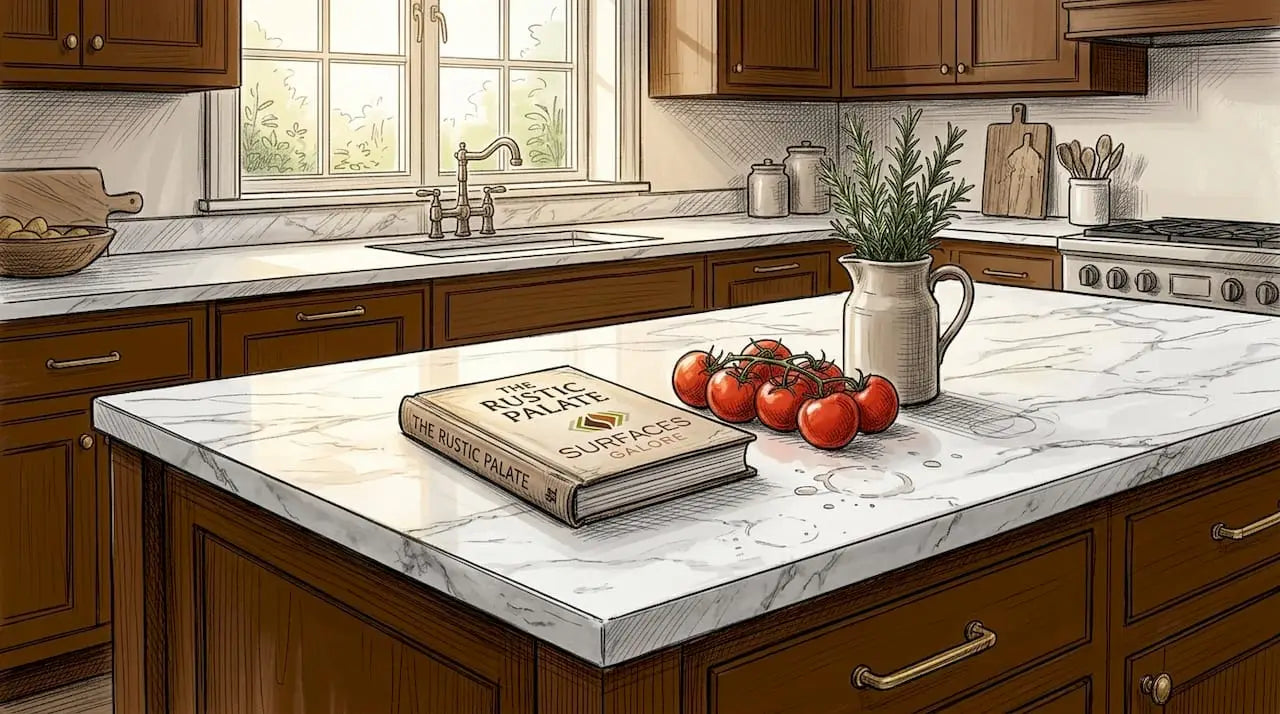
From a practical standpoint, Carrara is the most affordable of the classic Italian whites. Installed pricing typically runs $40 to $100 per square foot, depending on slab quality, finish, and your contractor’s labor rates. That range puts it within reach for homeowners who want authentic marble without the premium price tag of rarer varieties.
Where Carrara genuinely shines is in bathrooms, powder rooms, and vanity surfaces. In these spaces, exposure to citrus juices, vinegar, and harsh cleaning agents is minimal compared to a working kitchen. The lower acid exposure means etching is far less of a daily concern. You can use Carrara in a kitchen, but you’ll want to go in with clear expectations about upkeep.
Key reasons Carrara remains a perennial favorite:
- Soft, classic veining that works in both traditional and modern interiors
- Wide availability from multiple quarries means more consistent supply and pricing
- Accessible price point makes it the go-to entry point into natural marble
- Beautiful patina over time as the stone develops a lived-in, slightly aged quality
That last point deserves more attention. Carrara, like all marble, evolves with use. Subtle etching and minor color shifts accumulate into what designers often call patina. In a bathroom, this weathering creates a softness that synthetic materials simply can’t replicate. Many homeowners who initially stressed about every mark come to appreciate how the stone tells a story over the years.
Pro Tip: For bathrooms, opt for a honed finish on Carrara floor tiles. It adds grip, reduces slip risk, and wears more gracefully in wet conditions than a polished surface.
For design ideas that showcase Carrara’s versatility, explore our timeless Carrara design inspiration to see how it translates across different room styles and layout types.
With Carrara explained, let’s examine high-impact options for statement pieces.
Calacatta and Statuario marble: The statement-makers
If Carrara is the reliable classic, Calacatta and Statuario are the showstoppers. Both come from Italy and both feature bright, almost pure white backgrounds, but each has its own distinct personality. And both come with price tags that reflect their rarity.
Calacatta is known for its bright white base and thick, dramatic veins that range from warm gold and beige to bold gray. The veining is sparse but striking, giving each slab a unique, painterly quality. It’s the marble you’ll see in high-end kitchen reveals and luxury hotel lobbies. Calacatta typically costs between $100 and $250 per square foot installed, with exceptional slabs going higher.
Statuario takes things further. It features an even brighter white background with bold, complex gray veining that can appear almost artistic in its movement. It is rarer than Calacatta and priced accordingly at $150 to $300 per square foot or more. A Statuario waterfall island is a genuine focal point in any kitchen. It commands attention the way a piece of art does.
Both marbles suit bold design statements in kitchens and on islands. For a waterfall edge effect, where the slab continues vertically down the sides of an island, vein matching across the horizontal and vertical faces elevates the result dramatically. The investment in careful vein matching on a Calacatta or Statuario island is almost always worth it.
Here’s what to know before committing to either:
- Whiteness: Statuario is typically whiter; Calacatta has more warmth in its veining
- Rarity: Both are less common than Carrara, meaning higher prices and more variation between slabs
- Polished finishes emphasize the drama of the veining but make etching more visible under light
- Patina: Calacatta and Statuario used on kitchen islands develop etching patina over time, which some designers celebrate and others find frustrating
“The kitchens people remember aren’t the ones that stayed perfect. They’re the ones that developed a story. A Calacatta island with five years of cooking behind it has more soul than a pristine quartz replica ever will.”
The honest truth about Calacatta and Statuario is that they reward homeowners who lean into their natural behavior rather than fighting it. If you seal regularly, wipe spills promptly, and use a cutting board without exception, these marbles will reward you with decades of extraordinary beauty. Find your own Calacatta and Statuario inspiration to see what finished projects actually look like after real use.
Beyond pure drama, some marbles balance strength, subtleness, and warmth.
Crema Marfil and Danby marble: Warmth and practicality
Not every kitchen or bathroom calls for dramatic white veining. Some spaces benefit from a warmer, softer stone that blends into the design rather than dominating it. That’s where Crema Marfil and Danby marble earn their keep.
Crema Marfil is a Spanish marble with a warm cream to beige background and subtle, light veining. It reads as understated luxury. It pairs naturally with wood cabinetry, warm metals like brushed brass or bronze, and earth-toned tile. In a bathroom, it creates a cocoon of warmth that polished white marble simply doesn’t offer. Crema Marfil runs approximately $40 to $80 per square foot installed, making it comparably priced to Carrara.
Danby marble, quarried in Vermont, is a distinctly American option with practical advantages that are hard to ignore. It has a bright white to slightly warm background with subtle gray veining that draws favorable comparisons to Italian whites. More importantly from a performance standpoint, Danby offers higher durability and lower porosity than Italian alternatives, giving it stronger resistance to staining and moisture absorption in kitchen conditions.
Advantages of these two marble styles at a glance:
- Crema Marfil suits warm color palettes and adds depth to spaces that risk looking cold or clinical
- Danby holds up better in high-traffic kitchens compared to Carrara, Calacatta, and Statuario
- Both are more forgiving for households with children or frequent cooking
- Crema Marfil’s neutral warmth means it rarely clashes with other design elements
- Danby’s domestic origin can mean shorter lead times and more predictable sizing
For homeowners who love the look of marble but worry about the realities of daily kitchen life, Danby is genuinely one of the most rational choices. It gives you the authenticity and character of natural stone with a meaningful edge in performance. You can explore more about Danby and Crema Marfil for kitchens on our blog, and review our durable marble floor tips for installation best practices that extend the life of any marble surface.
After these introductions, let’s compare how the top classics stack up across all criteria.
Classic marble style comparison table
Here’s a side-by-side summary of the four classic marble styles, covering the criteria that matter most to homeowners making a final decision.
| Marble Style | Typical Installed Cost | Best For | Durability | Maintenance Level | Patina Character |
|---|---|---|---|---|---|
| Carrara | $40 to $100/sq ft | Bathrooms, vanities | Moderate | Medium | Soft, gradual aging |
| Calacatta | $100 to $250/sq ft | Kitchen islands, focal points | Moderate | Medium-High | Bold, dramatic evolution |
| Statuario | $150 to $300+/sq ft | Luxury kitchens, feature walls | Moderate | High | Rich, artistic wear |
| Crema Marfil | $40 to $80/sq ft | Warm-toned bathrooms, floors | Good | Medium | Subtle, warm deepening |
| Danby | $60 to $120/sq ft | Busy kitchens, family homes | High | Low-Medium | Clean, understated |
Maintenance is where many homeowners underestimate what they’re signing up for. All marble should be sealed every 6 to 12 months, and more frequently in high-use kitchens. Sealing protects against staining, but it does not prevent etching. When acidic liquids like lemon juice or vinegar contact marble, they chemically react with the calcium carbonate in the stone and leave dull marks regardless of whether the surface is sealed. This distinction matters enormously when setting your expectations.
Steps to keep your marble performing at its best:
- Seal new marble surfaces before first use and repeat annually for kitchens.
- Test the seal by dropping water on the surface; if it beads, you’re protected. If it soaks in, reseal.
- Clean up spills immediately, especially citrus juice, wine, tomato sauce, and vinegar.
- Use pH-neutral stone cleaners daily. Avoid standard household cleaners.
- Place coasters under glasses and trivets under hot pans at all times.
- Use a cutting board without exception on marble countertops.
When choosing a finish, the decision between polished and honed significantly affects both appearance and wear visibility. The polished vs honed marble comparison explains the practical differences in detail. For sealing marble surfaces correctly, following a consistent schedule is the single most impactful maintenance habit you can build.
We’ve compared the classics so now let’s fine-tune your pick based on your priorities.
Making the right marble choice for your kitchen or bath
With the full picture in front of you, narrowing down to one marble style becomes a matter of matching stone to situation. A few additional details around edge profiles, finishes, and sealing routines will round out your decision.
Edge profiles affect both the look and durability of marble countertops. Not all profiles are created equal for soft stone. An eased edge with a 1/8-inch radius is recommended for durability and minimal chipping, especially on softer Italian marbles. Avoid a full bullnose edge because liquids roll off it too easily, and ogee profiles chip far more readily than simpler options. For waterfall island designs, 3-centimeter thickness with mitered edges and vein matching delivers the most dramatic, seamless result.
Finish selection shapes how forgiving your marble will feel over time. White marbles show etching and stains more visibly on polished surfaces, which is why many experienced designers steer kitchen projects toward a honed finish. Honed marble has a matte, slightly textured surface that diffuses light rather than reflecting it, which makes dull etching marks far less obvious. It also feels warmer to the touch and photographs beautifully. Learn more about marble honing basics and the full breakdown of honed vs polished finishes to make an informed call.
Best-use recommendations by room and lifestyle:
- High-use family kitchen: Danby or Crema Marfil, honed finish, eased edge
- Elegant entertaining kitchen: Calacatta or Statuario, honed or polished, eased or mitered waterfall
- Primary bathroom: Carrara or Calacatta, polished or honed depending on preferred look
- Powder room or guest bath: Any style works well, Statuario creates maximum impact in small spaces
- Bathroom floors: Honed finish on any marble for safety and graceful aging
Pro Tip: If you’re using marble on both countertops and floors, consider using two different finishes. A polished countertop paired with a honed floor in the same marble creates a layered, intentional look that feels sophisticated rather than monotonous.
With these practical insights, let’s step back for a real-world perspective on classic marble choices.
Why the perfect marble doesn’t exist—and why that’s beautiful
Here’s something the marble industry doesn’t say loudly enough: there is no perfect marble for every situation. Every choice involves a genuine trade-off, and pretending otherwise does homeowners a disservice.
We’ve seen it happen more times than we can count. Someone installs a gorgeous Calacatta island, and within a few months they’re distressed about etch marks and calling to ask whether they made a mistake. They didn’t make a mistake with their stone. They made a mismatch between their expectations and their lifestyle.
The honest reality is that porosity makes marble unsuitable for unsealed, high-acid kitchens without a serious commitment to maintenance. Quartz alternatives can realistically mimic the look of marble without the same vulnerability. For some households, that’s the right answer. No judgment. But for households that go into the decision with clear eyes, marble rewards you in ways quartz never can.
The most beautiful kitchens we’ve seen aren’t the ones that stayed pristine. They’re the ones where the marble has accumulated a story. A light ring from a wine bottle here. A soft etch from a forgotten lemon half there. These aren’t failures. They’re evidence of a home that’s actually being lived in. Some of the most photographed kitchen marble trends right now feature marble that’s been used, loved, and allowed to age naturally.
The homeowners who are happiest with marble are the ones who chose their stone based on honest criteria, not just visual appeal. They picked Danby for the kitchen because it performs better under pressure. They chose Calacatta for the island because they were prepared to embrace its evolution. They went with Carrara in the bath because it fit their budget and their aesthetic without requiring constant vigilance.
The uncomfortable truth is that wanting maintenance-free marble is like wanting a cast iron pan that never needs seasoning. The care is part of the deal. And once you accept that, you stop seeing maintenance as a burden and start seeing it as part of owning something genuinely beautiful.
Explore marble solutions and expertise
Finding the right marble for your project becomes a lot more manageable when you have premium options and expert guidance in the same place.
At Surfaces Galore, we import directly, which means you get access to authentic Carrara, Calacatta, Crema Marfil, and more at prices that cut out unnecessary middlemen. Whether you’re a homeowner planning a bathroom renovation or a contractor sourcing stone for multiple projects, our team can help you match the right marble to your specific conditions, budget, and design goals. Explore our full range of SurfacesGalore marble options and follow our detailed marble installation guide to carry your project from selection through to a beautifully finished result.
Frequently asked questions
Which classic marble type is best for busy family kitchens?
Danby marble is recommended for busy kitchens due to its higher durability and lower porosity compared to Italian whites like Carrara and Calacatta, making it more resistant to staining and everyday wear.
How often should marble countertops be sealed?
Marble countertops should be sealed every 6 to 12 months, with kitchens requiring more frequent attention due to higher exposure to liquids and acids. A simple water absorption test tells you when it’s time to reseal.
What finish hides etching and stains best on white marble?
A honed finish is more forgiving because white marble shows etching more visibly on polished surfaces. The matte texture of a honed finish diffuses light in a way that makes dull etch marks far less noticeable in daily use.
Are quartz alternatives better for low-maintenance kitchens?
For households that prioritize zero-maintenance surfaces, yes. Quartz alternatives mimic classic marble looks without the same vulnerability to etching and staining, making them a rational choice for kitchens where regular sealing and careful spill management aren’t realistic commitments.

Leave a comment